Read the full transcript
Transcript is computer-generated and may contain errors.
Paul Spain:
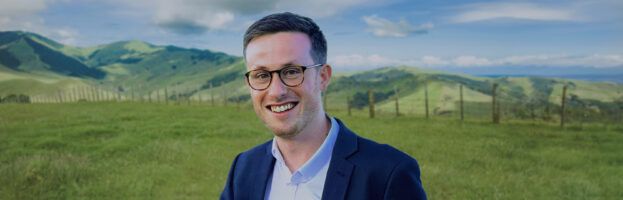
Greetings, I'm your host Paul Spain, futurist and Chief Executive at Guerrilla Technology. I really enjoy seeing and helping individuals and their organizations thrive. The New Zealand Business Podcast is all about this through sharing the stories and insights from our best and brightest.Today on the New Zealand Business Podcast, we're joined by Lachlan Murray, the Chief Executive and founder at Robomate. Robomate was founded in 2018 and since then has evolved from a small robotics business idea into a national operation supporting robotic lawnmowers, robo vacuums, and broader home automation solutions across New Zealand. Robomate has seen remarkable growth, being recognised as the 5th fastest growing company in New Zealand in the 2025 Deloitte Fast 50, achieving an impressive 408% revenue growth over 3 years a testament to the team's execution in a rapidly expanding global robotics market. Lachlan's work also earned him recognition as a finalist for the Young Businessperson of the Year in 2024, underlining the impact he's already had on New Zealand's business landscape. Today, you'll hear how Lachlan navigated the ups and downs of building a business from scratch, how he bootstrapped his way through setbacks and harnessed a customer-focused approach to become a leader in an emerging market.Paul Spain:
He'll share the insights on growing his team, scaling, and why discipline and solving real problems are at the core of Robomate's success. The New Zealand Business Podcast is proudly brought to you by One New Zealand and Guerrilla Technology. Now before we jump into the interview, a quick question. How confident are you in your organization's cybersecurity? A cyberattack costs a typical small or medium organization over $180,000, and I wouldn't want you to have to deal with that.
So I'm offering New Zealand Business Podcast listeners a free cyber risk review call valued at up to $500. You'll get a personalized action plan to lower your cyber risk. This is seriously high value and no strings attached. If you're interested, tap the link inPaul Spain:
the show notes or on the episode page to reserve your session.Paul Spain:
Well, welcome along to the podcast. Great to have you here, Lachlan.Lachlan Murray:
Thank you for having me.Paul Spain:
Oh well, a real, real privilege to have you on the, on the show. Be great to sort of start atPaul Spain:
the beginning, tell us a little bitPaul Spain:
about where you were born, where you grew up, and what that looked like.Lachlan Murray:
So I was born in Wellington, but I started school in Auckland. So I've been in Auckland since I was 5, lived most of my life around the North Shore, grew up around some business stuff going on in the family. But yeah, just a kid growing up, going to school, wasn't great in school, got all right marks, but probably said I was a little bit disruptive or whatever at times. But yeah, nothing too major. Pretty normal.Paul Spain:
Do, do you remember kind of, you know, talking business type stuff around, you know, around the dinner table, or, you know, where, where, where did you get your sort of first insights on, on the business world?
Lachlan Murray:
Definitely. I grew up hearing about the good and the bad of business. Yeah, I think when you're running a business, you generally talk about the bad more than the good. Yeah, day to day. So I heard lots of the challenges and struggles, and yeah, it didn't really sell it to me, to be honest.
Paul Spain:
And what sort of field were family involved in, sort of business-wise?
Lachlan Murray:
So they were in like commercial lighting stuff.
Paul Spain:
Yeah, yeah, okay. Okay, so that put you off a little bit, obviously not too badly.
Lachlan Murray:
It did put me off for a fair while. I was determined that I wouldn't go into business, actually. So after I was out of school, I was looking for something to do for a while. I was determined that I was gonna be a paramedic and started off down that course. And eventually, I guess it's in the blood, so kept coming back.
Paul Spain:
Yeah, yeah, okay. So after finishing up school, you sort of took a turn in that direction. I think I saw you did some volunteer work volunteer work and whatnot?
Lachlan Murray:
Yeah, so I actually— I'm a celiac, which means I can't have gluten, and I wasn't diagnosed at the time. Oh, so I had a whole lot
Paul Spain:
of health— my father has the same.
Lachlan Murray:
Yes, I had a whole lot of health issues and stuff going through school, and so I didn't even finish school. Hence why I was saying to you before we started, uh, probably the least educated person in New Zealand. But I didn't finish school. I did eventually get my university entrance. I did a bit of work in the family business for a while just to get a taste for it, but decided that I didn't really want to pursue business at that point in time. Yeah. And I wanted to do something more, you know, immediately helping people, get completely away from business. And so yeah, I enrolled to study paramedicine at AUT, and before I went and committed to it, I decided to go down the volunteering path, and I absolutely loved it.
Lachlan Murray:
But we don't treat paramedics in New Zealand particularly well, And I could see the trajectory, you know, of where things would have gone if I'd gone down that path. So it's super rewarding, super fun. But yeah, it's a calling, not a career.
Paul Spain:
Yeah. Yeah. How did you kind of make that decision in your head? Was it— did it become reasonably black and white, reasonably simple for you to decide not to pursue further?
Lachlan Murray:
Yes, it was pretty simple. Obviously in the ambulance, when you take people into the hospital, there's a waiting bay at the ambulance area. And the thing that probably put me off was you could actually see, looking at people's faces, how far they were through their rotation and their shifts. And so you could actually just see, you know, how much they're carrying, how much stress and how much burden there was. And so in New Zealand, because it's going through like a charitable trust with some government funding and stuff like that, it's, it's in a pretty tough stage. I mean, You do it because you want to help people, but it's going to come at a pretty huge cost to you. So I could obviously see that, and I still have a lot of respect for the people that actually can stick through it and do it. But I went through that volunteering phase, working frontline out in Helensville, which got me a taste for it, kind of helped me get some of the adventure out there.
Lachlan Murray:
And it was at that point in time where I started to do some of that, you know, marketing stuff for other companies, essentially like a freelancer with a couple of subcontract people helping me out.
Paul Spain:
Right, so this, this was your, your way to earn, earn some money and I guess lean into areas that you had an interest in, in terms of business and marketing?
Lachlan Murray:
Yeah, exactly. So the fun part of business for me is probably the creativity around marketing and then strategy and trying to understand like the people side of it. So marketing was the easiest to get into at that point in time because I had absolutely no money to do anything. Yeah. So it didn't require anything, just, you know, a couple of business cards and you walk around and meet some people and see where it leads.
Paul Spain:
Yeah, yeah, yeah. And so how did you, how did you, you know, win some business, find some initial work to do for others?
Lachlan Murray:
I recall just going around door to door, meet a few people, then they introduce you to their friends. I think the cool thing about New Zealand is if you just put yourself out there and, you know, kind of admit that you need help, people are pretty keen to give you a chance. And I obviously was super passionate about what I was doing, so I guess that helped.
Paul Spain:
Yeah.
Paul Spain:
And what age were you at this point?
Lachlan Murray:
I would have been about 20, 21. Yeah.
Paul Spain:
Yeah.
Paul Spain:
Okay.
Paul Spain:
And how was the response? How did it go?
Lachlan Murray:
It was pretty tough. The thing that I found hardest was actually the fact that we're doing a creative process. So me being me, I put everything into it, and by definition you're doing this creative process for someone that's chosen to outsource it, so they don't necessarily understand what it was. And so at times I felt like I was doing something that was pretty cool, and then it would go through a whole bunch of, you know, revisions, and by the end of it, it's like, man, it would kind of be like what you do with AI now. It wasn't a tool back then, but it kind of felt like it was just— and so after a period of time, I was kind of just sick of going through that process. It wasn't so much around whether the business could work or not, it was just wasn't quite fulfilling enough for
Paul Spain:
me. And so tell us how Robomate came about.
Lachlan Murray:
So my dad actually had robot lawn mowers in 2008, which is way back before it was really a thing. So that point in time, he had to import them from Italy direct. There was a company called Ambrogio in Italy. At that point in time, they had perimeter wires that you needed to bury around the edge of the lawn. They were pretty basic, really. It would have been 2018 when I was doing this marketing stuff still. That a family friend that also lived near us said, hey, what do you think of those robot lawnmowers? We're sick of mowing the lawns. Do you reckon they could do our property by now? Their property was really big, really steep, pretty brutal sort of conditions, but kind of thought it's been another 10 years of development from where they were then, like surely now it's worth a nudge.
Lachlan Murray:
We really quickly learned at that point in time that they hadn't really changed much. Since 2008, the fundamentals hadn't changed. They still needed perimeter wires. So sometimes it would dig up the perimeter wire and cut the cable. Oh boy. And then other times though, it just means that it started to dig a hole. And then if you imagine big thick mud tires on like a truck or something like that, once you've done a few rotations in mud, they become like slicks. And so then it's going around just roughing everything up and making it worse.
Lachlan Murray:
So then next time it goes out, it gets even worse. So there's so many little cyclic issues that can't be solved. 'cause it just didn't have actual awareness of what it was doing at that point. And so I also really quickly figured out though that there were going to be a lot of big changes in the pretty near future and that it wasn't worth trying to scale a business behind that sort of technology. So after that, we pivoted to doing robot vacuum cleaners. This is still probably 2019, so there was still a very strong stigma around robot vacuum cleaners at that point in time that they would, you know, get stuck under the couch. You'd have to pick them up and put them into each room at a time. They were kind of just gimmicks for geeky people to have because it was cool to have and a bit of fun, but they didn't really work.
Lachlan Murray:
But at that point in time, things were really just starting to change. There was a company called Neato which was out of the US. Yeah. And they had just put LiDAR on top of the robot. And so the robot was starting to map the house, which meant that it was actually going backwards and forwards and it was smart. And that actually, that actually put proper suction on the vacuum. So the prior ones, because they weren't really a proper serious thing, didn't have much suction. Yep.
Lachlan Murray:
So as soon as they put the navigation on the robot vacuum, then it was worth making it actually clean properly. And then as soon as it starts to get to that stage, then the industry starts to grow really rapidly and the investment and stuff starts to hit some sort of exponential growth. So we got into that in 2019, and then very shortly after that COVID hit.
Paul Spain:
Okay, so you'd— and what did you have at that point in terms of a public presence, retail presence, and so on?
Lachlan Murray:
We had nothing at that point.
Paul Spain:
Right.
Lachlan Murray:
So one of the things, the original plan was actually to be more of a standard distribution company. Right. So we would buy the product, act like an importer, and then go through other channels. The reason why we didn't do it in the end was with something like a robot vacuum or a robot lawnmower or something like that, it's quite a complicated product. And so if you're looking at the channel partners that you have out there, they're taking a pretty significant cut of the total revenue, except they're not really equipped to promote it or actually to do much of value to help build the segment, if that makes sense. So what the realization was in these early phases, we went to a whole lot of like home shows and stuff like that. And we discovered that all of the questions that people had about the product were about whether it would actually work, dispelling some of the old myths. But actually people understood that if it did work, they would want it.
Paul Spain:
So I mean, at this stage, what sort of level of overheads did you have and what did your sales look
Lachlan Murray:
like? Not much, not many overheads. I was working out of my parents' house.
Paul Spain:
Yeah.
Lachlan Murray:
A few boxes in the corner of the garage, going to the home shows, which would just pay for themselves. We had a website which was selling enough, kind of just enough to, you know, keep living.
Paul Spain:
Right, so you were almost kind of hand to mouth as it were at that point?
Lachlan Murray:
Oh, 100%. Yeah.
Paul Spain:
100%.
Lachlan Murray:
Wow.
Paul Spain:
Yeah. And so what did COVID bring?
Lachlan Murray:
COVID would have been good for us if it wasn't for the component shortages. So there was actually a huge demand from like an e-commerce perspective for all of these things. But we had just gone away from the robot lawnmowers into the Neato robot vacuums. At the same point, just before COVID a giant German multinational bought Neato. And there were a few issues trying to integrate like a German industrial company with Silicon Valley. You know, I witnessed it firsthand in the office seeing this industrialist guy, the new CEO, trying to talk to some Californian software developers in shorts and chandals. Yeah. And there was obviously like a little bit of a mismatch and I could sense it then.
Lachlan Murray:
But when COVID came, they were in the middle of launching a new product range and that product range ended up being 18 months late. You could probably blame it partly to component shortages, but it was also partly, I think, from a cultural mismatch internally there where they probably got some of their engineers offside with the company vision. Yeah. And so the new product came out 18 months late and it wasn't actually much of a step forward at all. And the whole thing kind of just fizzled. Nothing really happened. It kind of just fizzled out. But Nito went from being this amazing up-and-coming company that had just been acquired to gone within like 2 years.
Paul Spain:
So that's quite a challenge. So did you sort of recognize what was going on and managed to, you know, find some other, other brands and some, you know, some other options, you know, quite quickly?
Lachlan Murray:
For a while, the company was essentially completely gone, and I was, I was pretty defeated, to be honest with you. I was starting to sharpen up my own CV, just about to consider, you know, applying for more jobs and stuff like that. But I decided to just give it one more nudge because what I said earlier about the issues with the channels and the fact that no one was actually trying to drive the segment was still a problem that needed to be solved. But I had just lost all of the capital that we had started to started to slowly build in this scenario. So we had absolutely nothing left. So what we actually did was I—
Paul Spain:
and who was working in the business at that point?
Lachlan Murray:
So I had some help from my dad initially. In all of this, they moved to Wellington. I was on my own up here now trying to figure out what I wanted to do, but I knew the problem was big and I knew that the opportunity was coming. I was also aware it was slightly too early But I couldn't face going through and applying for jobs and all of that. I thought I just should give it one more try. And so what happened was I went and spoke to a friend of mine, a girl called Louisa, who was working in corporate law at the time. And I knew that she was burnt out with that and wanted to try something else. I didn't have it in me to do it completely on my own again, I don't think.
Lachlan Murray:
I just needed— it was more for a bit of support. To do something fun together. Yeah. But we got a friend of mine, let us set up camp in the corner of his office. And this time around, we decided to be like a retail channel for robot vacuums. And so at this point, there are a few brands that were starting to go into, you know, Noel Leeming's, Harvey Norman's, JB Hi-Fi, all of the big
Paul Spain:
guys. Sure.
Lachlan Murray:
So we went to these people and said, hey, look, we want to be one of your channel partners. Our strategy was to come into the market, and we decided that we were going to make videos explaining all of the answers to the questions that we had at the home shows. So rather than trying to sell stuff to people, we were taking the more, you know, like geeky approach of explaining how it works. And rather than saying like, it can suck up pet hair, trust me, we would make a video showing it. Doing that in a real life scenario. And so we went and we got all of the big brands at that point in time onto one website. So it was almost more like a review website for robot vacuums with videos filmed on an iPhone that I'd financed.
Paul Spain:
Okay, wow.
Lachlan Murray:
We were determined to be a place where you could, A, get advice properly to figure out which one was going to be best for you And then we were going to be end-to-end partners with the customer right through the journey. We decided that we were going to try and give people proper tech support. So rather than following fully through a script, we would actually just know the product well enough, get to the heart of the issue and get it solved relatively quickly. So that was probably the biggest value proposition that we offered to the customers. And I guess it worked.
Paul Spain:
Yeah, yeah, absolutely. Gotcha. So when you started effectively retailing the robotic vacuums, when were we talking that that happened? What time?
Lachlan Murray:
This would have been probably 2021 at this point. Yeah. Okay.
Paul Spain:
Yeah. So not that long ago.
Lachlan Murray:
It feels a long time ago. Yeah.
Paul Spain:
Yeah. Maybe it's sort of 4 to 5 years ago, right? Yeah. And so then how did you evolve from a retail standpoint during that period?
Lachlan Murray:
So right back when we gave up on the robot mowers, we sat down and we was literally on a piece of paper, drew what we thought someone should make and it had a few requirements that it needed to tick before we'd want to do it in New Zealand. And the requirements were it needed to be wireless, It needed to be four-wheel drive, it needed to have a low center of gravity, and it needed to be powerful enough to cut through kāikaea. So pretty basic, pretty simple. The drawing that we drew didn't look like the thing that we found in the end, but it ticked the boxes.
Paul Spain:
It did the job. Yeah,
Lachlan Murray:
yeah, yeah. So Mammotion is a split-off company from DJI, the drone company. Okay. And they came in, rather than making iterative changes on a previous generation, when they launched into the market, it was completely and utterly different to what anyone else had done. And so the decision to go with them was just because they were the only ones that ticked all of those boxes at that point in time.
Paul Spain:
You know, what were the things that sort of stood out to you around, you know, how they were going about it and what did that trigger for you?
Lachlan Murray:
So the funny thing was we had actually been trying to contact them for a while. Yeah. And they were growing real fast, probably in that crazy startup phase, and we never heard back. But through the robot vacuum journey, our YouTube channel had got a little bit of traction, and one of their social media people reached out to us and asked like, hey, would you be interested in doing a review video on this product? I had said to them, I'll do this, But if it is good, we would want to talk about the business side as well because, you know. And so we got the sample and as soon as I got it out of the box, I took it out to the property where we first, that first got me into this whole journey and set it up and it just worked. And so the app was pretty ugly at that point in time. There were a few little things that were like, not great, but the fact that it could do it when nothing else could, like within about 10 minutes, I just knew that this thing is pretty insane.
Paul Spain:
Wow, wow. Did that give you a sort of an immediate clarity around, hey, this is where we can go with the business with a product like this? How long did it, you know, take you to work around, you know, what did you need to do in terms of, you know, getting distribution and, you know, the other bits and pieces and, you know, maybe refreshing your, your business strategy?
Lachlan Murray:
I already had the plan of what we were gonna do. I was waiting for the product. Gotcha. So as soon as we saw it, I was like, okay, we're on here if we can, you know, get this across the line. There were a lot of other companies that had been in discussions with them and some of them were pretty big companies that people would know and they were a lot further down the discussion path. But we kind of got in and by explaining around some of the channel struggles and stuff that we had, and then also the fact that we had this super strong customer-centric mindset and we weren't a typical distribution company with, you know, dozens of other brands. It kind of just resonated with them. So we had the— while I was making the review video, I started talking to the sales guy at Mammotion, and had a discussion.
Lachlan Murray:
He— I, I don't know, I think it just clicked. We got along well right from the beginning. He liked our ideas. And so about 2 weeks later, we had an agreement signed. And yeah, one of the clauses in that distribution agreement was that we had to place an order for a full container load within 7 days of signing. And, uh, so I didn't have the money.
Paul Spain:
How, how much are you talking for a container load of these these things at that point. We're talking tens of thousands, hundreds of thousands. Hundreds?
Lachlan Murray:
Yeah. And it may as well have been a billion, like, to me at that point in time. It was a real chaotic period of time there where I had this thing, the business was growing. It was always two steps forward, one and a half steps back. We were a real small fish playing against, you know, in a very big pond. It was really hard. So things were all right, but it was very slow. And then when we got this, I realized that it was going to be big immediately.
Lachlan Murray:
So I was running around trying to find investment. Obviously, not other people don't necessarily see the full opportunity at that point. I would have secured the investment, but actually I ended up speaking to a friend and he said, have you talked to BNZ? And I hadn't even considered it. 'cause banks just don't fund this sort of thing. It's kind of crazy. But the way that it worked in the end was that we signed the distribution agreement on a Friday. We launched the pre-orders on our website on that Friday. We launched our review video on that Friday.
Lachlan Murray:
We emailed our database on that Friday. And then I had a meeting with Vivek from the BNZ in the afternoon. So all of this all in one day. And so our 7-day timer started ticking. And over the weekend, because we had built great trust with a lot of people, by Monday or Tuesday, we had pre-sold like 40-something units. We were taking deposits. And I want to put this out there is that we kept them all in a separate account. I did not want to get on the news for that sort of thing.
Lachlan Murray:
So we kept people's money fully secure the whole way through. Yeah, we had the meeting on, I think it was Tuesday, with Vivek to follow up. And by that point in time, we obviously only have like 3 days left, which for a bank to get the funding across the line is pretty insane. But they pulled, you know, a rabbit out for us. They got us funding in the form of an unsecured overdraft, which was enough to get the payment for the container. And so from that point on, the people's deposits were safe. Yeah, they were always safe though in the trust account, but by that point they actually— we owned the unit to give to them, so everything was safe. And we got the container across, and then for the next like 18 months, the demand was just so big for it that we struggled to keep up.
Lachlan Murray:
When we got that all signed, we still actually only had a team of 3, so me and 2 others. Wow. And Very quickly, again, leaning on a friend in a dire situation, got another friend, Dan, on board. And so it was a team of 4, except things just went ridiculously fast. And we're doing this all with this bootstrap mentality, which means that the sales always ahead of the resource. It's kind of like the cart leading the horse. And so it was growing faster then we could actually continue to grow the business behind it. And it's also in a new industry, so we couldn't go and hire a resource that knew what they're doing.
Lachlan Murray:
So every time we brought someone on, it was from a standing start. So we're trying to run the business, grow the business, and then train people. And so sometimes at points in time, it was, it was pretty wild. We would hire someone, train them for 2 months, and then Next month, I'd be training someone new. And it was just this crazy thing. But we got super lucky in the types of people that we attracted. A lot of our first staff that are still with us today were customers in the first place. And so they were kind of on board as a passion journey.
Lachlan Murray:
And they already understood the product. So there's been a huge amount of— we'll call it pain suffered by a lot of people in the name of getting Robomate where it is now.
Paul Spain:
Did you actually kind of do your recruiting through your customer email list? How did, how did, how did that happen that you ended up having, you know, customers come on to your, your staff?
Lachlan Murray:
We never did outward recruiting in that sense. We were getting inundated in every single way, but one of the things we had a lot of people writing like, hey, this is the coolest thing I've ever had. My wife is saying that I'm spending all my time on it, I should probably get paid for it. So we had quite a few people like that. And yeah, we just picked the people that resonated with us and obviously as a customer as well, they understood the values and stuff that we're trying to get. So that resonated as well as the tech and the combination, I don't know, just attracts like-minded people, I guess.
Paul Spain:
Yeah, and you know, how did you kind of shape the business? You know, those early stages, you know, you're hiring people quite quickly, you've got, you know, all the areas of business that you need to stay on top of and you're still reasonably new at it. So were you kind of hiring people into the finance and HR and operations type roles or how much were you doing of these things? How did that play?
Lachlan Murray:
I was doing a lot myself with the help of others of course, but it really felt like a whole bunch of people pulling together and a whole lot of people doing a lot of different things. And it was just like a, like a working bee that lasted a long time. Yeah. And it wasn't until things started to like stabilize that we actually got those specialized functions covered. I was fortunate through the whole period to have a good accountant. He was right, we're essentially one of his clients for his tiny little practice originally, but then he sold the practice and kept us on as his only one. Oh, fantastic. So throughout this entire period of time, because it's It was still bootstrapping hard, I think.
Lachlan Murray:
Our cash flow cycles were less than a month. So he was doing cash flows every single day. So I had experience in the finance department, and we had experience in lots of things. As things have started to settle, then the structure's been put in almost retrospectively. It's not the way that I'd advise anyone to do it, but it was kind of just needs must.
Paul Spain:
Yeah. At what point would you say things started sort of, stabilizing?
Lachlan Murray:
Probably 2024, but it's always a work in progress. Things are pretty good right now, but we've still got a business that's still growing rapidly. There's still no one else out there that we can hire on board that's qualified. And on top of all of this, it's super seasonal. And so like one day the sun will come out and the grass will grow and all of the leads and stuff we've been talking to for the last few months all buy on the same day. And so yeah, it's not, it's getting easier and the problems are changing and things are getting more stable, but it's definitely not easy.
Paul Spain:
Yeah, you know, tell us a little bit about how the business sort of looks at that point, you know, 2024, you know, compared to prior in terms of, you know, what, what was the shape of the business? Who did you have?
Lachlan Murray:
So we went from working out the back of our Newmarket store, which opposite the Westfield, and just a little tiny store on Broadway. We went from working out the back there with 3 people, and within 6 months the store was slowly getting smaller because we were pushing the shelving up the, the back wall shelving further and further forward until it was a tiny little hole in the wall and the rest of it was office space. Okay. So we had them click and collecting from our store, and there are periods of time where we couldn't see each other because there's just walls of robot boxes in our office. So we went from that, and then we— it was all growing so fast that it got to a point where the office itself was one of our constraining factors. So then in the middle of our busiest period of all, we then had to move office. But then that meant we could at least start hiring again and keep growing. We had actually reduced like our marketing spends and stuff like that to try and slow things down But because we had a pretty cool product that was super unique and we were bringing the customer service and building relationships and stuff with people, people telling their friends, so it wasn't actually really helping us.
Lachlan Murray:
So it just kept growing regardless of what we wanted to do at that point in time. And we've kind of just been swept along with it. And so we're trying to get all of those structures and stuff in place and it's looking much more like a normal company now. But for a long period it wasn't, it was just wild.
Paul Spain:
Yeah. Now you've got some presence across the country. When did you start building that out?
Lachlan Murray:
That started pretty soon after we took on Mammotion and a lot of our earliest people were the customers that I mentioned earlier. So our strategy there was to get, you know, just get a man in a van that can do most of the functions. So it's almost more like a little tradie model where they're not really salespeople, but they can turn up and show you the robot working at the house. But then the same person can help you do basic stuff, can help you get set up, all of that sort of stuff. So they're just our person on the ground, almost like its own little small business in a way. So that started pretty soon after, and then I'd struggle to tell you at what point in time we had what, but now we've got up to about 15 vans around the country.
Paul Spain:
You don't have to have a massive amount of, you know, business in one area for that to be viable? Or have you got a sort of a formula for, okay, we've got this much business, it makes sense? Or if you've got someone who's knocking on your door saying, hey, I want to represent you in Waikikamukau, that there's, you know, some way of figuring that out?
Lachlan Murray:
Initially it was gut feel. And then obviously now we've got some data based on what people are buying without representation there of what areas we should be servicing. And then we also have pretty good understandings just based on population size and demographics and stuff like that, what's gonna work. So it's not that hard to predict. There's obviously lots of aspects to it, like not just the demographic and the type of people and the types of properties that they've got there, but also who you manage to secure in that region and whether they're gonna be stronger technically or sales or all of those sorts of things. So there's lots and lots of factors, But generally speaking, in the beginning it was a gut feel and based on who we found. And then now over time it's becoming more data-led, which is probably the way it has to be.
Paul Spain:
Yeah, yeah. It sounds like they're both sales and technical, but you don't actually have a storefront, right, as such in the different areas?
Lachlan Murray:
No, that's right. So most of the time they're going to customers' houses and essentially someone, Sees an ad online, they have interest, they— we contact them, make a booking. One of our guys goes out there, essentially just does a demo. It's not really a sales process.
Paul Spain:
They can get the mower around. Consultation where you can help them understand what would be the right technology to suit their requirements.
Lachlan Murray:
Yep. So they can actually set the mower up fast enough that they can cut the customer's lawn while just having a chat about everything. And then most of the time there isn't actually much of a sales process involved. Like, they've got you out there because they want it. Yes. And they just want to see that it's working. Yeah. And so they go out there and do that, and then they also know that if they do decide to buy and go ahead, that that person is there if they ever get completely stuck.
Lachlan Murray:
With the growing challenges and stuff like that, and the people that are out on the road all the time, we would do like a first tier of tech support via the phone. And then if we can't solve those issues, then there's other options like sending them back. But as each region starts to mature in its own right, then we've started opening up physical stores with their own workshops off the back and then splitting out those different functions afterwards. So that's the strategy.
Paul Spain:
Yeah, that's really impressive. And so now when you look at what you've got around of the country. How many, you know, what, what areas are you kind of touching?
Lachlan Murray:
We're in Northland, Auckland, Waikato, Bay of Plenty, Central Waikato, so like Taupo, Rotorua, Hawke's Bay, Wellington, Wairarapa, Christchurch. So we're still missing a few spots, but, uh, we should have it all covered pretty soon.
Paul Spain:
Wow, wow. We've been talking around the lawn mowing side. At one stage you were doing the robot sort of action for swimming pools and of course the in-home vacuums as well.
Lachlan Murray:
So we're still doing the pool cleaners, we're still doing the vacuums. These industries are a little bit more— we as a company are not wanting to be like the robot mowing people. It's just that robot mowing is probably the biggest problem in New Zealand. And it's the thing that's seen the biggest change at the moment. Our focus as a company is on being the robotics people. And then I almost see us more as being like a tour guide into the technology for people that don't understand the technology. So we break it down, make it easy to understand, and then we take them along the journey. And so we find the best products and then bring it for them.
Lachlan Murray:
So we're not trying to find every robotic product that's out there. There's so many things, but we're trying to make sure that it is actually like fit for purpose and does the job.
Paul Spain:
Right, so no humanoid robots just yet, but that might be coming up in the future?
Lachlan Murray:
Nah, and I like to test these sorts of things and play with them, but I'm not out there to try and sell stuff to people that's not actually gonna help them, so.
Paul Spain:
Yeah, okay, now to the Deloitte Fast 50 Index, you've landed at position number 5 there, 408% revenue growth. You know, when you think about your journey, you know, what's been the key to being able to get to this point where you're able to grow and to scale so quickly?
Lachlan Murray:
There are quite a few different factors. The number one would be timing in the sense that, so the time has been right for the technology to shift. In our case, it was because we waited until it was right. The second, I think I would say is, We have a really clear problem that we're solving, so we're actually helping people do something. So a lot of businesses will have the challenge where trying to actually get the sale is the challenge. So they got a cool idea, but then they've got to try and convince someone that they need it, whereas we're out there selling something that people are already aware that they need. So therefore, like, most of our effort doesn't need to be on selling the product or even marketing the product. It's not at all about that.
Lachlan Murray:
It's all about like service, customer service, helping people get on board so that they have good experiences with it. And then because it's such an exciting product, they naturally go and tell all their friends. And you go and buy a robot and then you have a barbecue next week and then happen to have it going out past it. So our whole philosophy is about like actually about the people. We're there to serve the people and help them have a good relationship with their robot. And if we can do that, we don't really have to do much else because it kind of just sells itself and spreads organically.
Paul Spain:
Yeah. Why now for you entering, you know, entering the Deloitte sort of Fast 50?
Lachlan Murray:
There are a few things. Number one, partner at BNZ being a sponsor of it was pushing us to do it.
Paul Spain:
Yeah.
Lachlan Murray:
So that's number one. And number 2, I think when you're building a business and you're in startup phase, you're a little bit paranoid about people knowing what you're doing. You kind of want to build your moat before you get your name out there too much. You want to have as much success as possible without getting too much attention. And so we finally got to the position now where I feel like we're pretty mature and happy to just start talking about it.
Paul Spain:
Yeah, great.
Paul Spain:
Now when you look at other, other markets around the world, and often with startups you know, there's guidance of, hey, you need to be global from day one and so on. You know, we're used to hearing this, you know, this sort of advice. Now, do you look out beyond New Zealand and see some opportunities?
Lachlan Murray:
Yeah, no, we have got big plans. We don't rely on any like sorts of tricks or anything like that. A lot of companies, Kiwi companies go abroad and then struggle, whereas like we're just, doing pretty simple things that will resonate. It doesn't really matter what language you speak or what culture you've got, it's going to resonate everywhere. We're just people out there just trying to help people use tech. And so there is a big gap in other places as well, and we've gone through the hard yards to learn how to do it really well, and we've built a lot of good relationships with, you know, the right people in the industry. So there's a lot of opportunity out there, but trying to scale it all a little bit more methodically and smoothly this time around.
Paul Spain:
Yeah, you've really bootstrapped and you've earned the revenue you've needed to expand and grow in the past. Is that something you think might need to change if you're going out beyond New Zealand shores?
Lachlan Murray:
It's interesting, but it seems like we won't actually need to burn too much cash to get where we need to go. I think if you're starting from a cold start, Yeah, it would need big buckets of cash. But now that we've got a lot of infrastructure and know-how in place, we should be able to get through pretty smoothly. The intention is to continue to try and bootstrap it as much as we can. We've got a little bit more in the boot now, so hopefully it goes well.
Paul Spain:
Yeah, yeah. Oh, that's really exciting. You know, we've touched on a few places, some of the harder pieces, but it is often those, you know, those toughest kind of periods in a business where you really learn learn the most. When you look back, are there any other sort of learning points or challenging periods that have hit you along the way that might be interesting to delve into?
Lachlan Murray:
I think it's been incredibly hard at most parts of the journey. It's easing off a little bit in the last 12 months. But when you're really small, you have certain problems and then the growing pains. The hardest thing for me is how quickly I personally have been forced to grow. When you're running a small team of 3 people, you can kind of just be mates. You're hanging out doing stuff, it's cool. And then as the company's grown, my relationships with people have to change slightly. I have to be a little bit more serious.
Lachlan Murray:
And then, you know, just the structure and discipline and stuff getting built into that. It was almost like monthly at times felt like, you know, here's another growth curve, here's another growth curve. I personally have gone from the point where like I would be super stressed about everything and I almost feel like I reached the bottom in terms of stress. And so now I'm getting to a stage where I'm building a little bit of confidence, I guess it is, or confidence that I've kind of survived going to the bottom in terms of stress levels and struggle, and that, you know, whatever gets thrown at me now, we've achieved something pretty cool. And we've got a lot of skills and stuff now that we didn't used to have, so feel a lot more relaxed about it all.
Paul Spain:
Yeah, well, you've got a lot of experience under your belt now, right?
Lachlan Murray:
Yeah, pretty great for my
Paul Spain:
age. What have you leaned into in terms of, you know, your own, your own development for for help? Has that been individual people? Has it been books or courses or just studying and learning the things you need to learn as you go?
Lachlan Murray:
Pretty much just studying and learning as we go. I have some great people to help me. We tried having formal advisory and stuff like that, and we really struggled with it because things would change so much that trying to keep the advisors up to date was hard. But with single issues and stuff like that, Once you've done it once, the next time is a little bit easier. But with Google out there, lots of people able to help you. Like they said at the Fast50 event the other night, the cool thing about New Zealand is pretty much anyone's just a phone call away. And most people will take it and make the time to meet you. It doesn't matter if they're like a billionaire or whoever they are, they'll make the time.
Lachlan Murray:
Like a lecturer or something like that, most people will meet you and have a chat. That's great.
Paul Spain:
If we were to be chatting again and it was 10, 15 years down
Lachlan Murray:
the
Paul Spain:
track, what do you imagine business might look like in that sort of period of time? Can you imagine that far out?
Lachlan Murray:
I always joke that robo years are like dog years. So 10 or 15 years may as well be like a century at that point. I can't even predict what the product would look like exactly., but I can predict that, like, personal building relationships with customers, looking after people, caring about people, all of that sort of stuff is always going to be relevant. And the further the tech gets developed, the more important that that becomes. So our company philosophy is just serve the best tech that gets there to help people, and then try and hold on to that sort of stuff as we grow.
Paul Spain:
Yeah, that's great. Anything else that, uh, that you wanted to add, or some— any closing, uh, Advice for, for listeners, Lachlan, from your journey?
Lachlan Murray:
Advice? I don't know how I've ended up in a position to give advice, but I think that it's not necessarily about having good ideas or anything like that. It's about identifying a problem that you want to solve and then understanding your own personal strengths and your personal weaknesses, focusing on the weaknesses, not the strengths, which is the temptation. And then what will get you there in the end is actually discipline. There's no, no substitute for discipline. And I was talking to another guy who's at the other end of his career and much more successful the other day, and he said that he picks the people that he invests in based on who he thinks will be able to suffer the most. And so I see some of those courses and stuff going around online about, you know, e-commerce courses and all of that sort of stuff. Like, e-commerce is just business. You've got to really want it, and you've got to have a real reason for doing it because The money and stuff won't keep you going once it gets hard.
Paul Spain:
Yeah.
Paul Spain:
And what are some of the disciplines that you've put into place to be able to succeed?
Lachlan Murray:
It's been forced on me once it's grown. The discipline in the beginning was just literally just turning up. And the point in time when no one's aware of what you're doing and you could just give up and go and do something else. It's just turning up and then being, a little bit mean with yourself and your time, not giving yourself too many excuses. So at the start of the day, this is what I'm going to achieve today, writing it down, crossing it off, don't go home until it's done. And just being a little bit like holding yourself accountable. There's no real secret to it, I don't think.
Paul Spain:
Well, thanks very much for joining us on the podcast. Really, really insightful and appreciate your time, Lachlan.
Lachlan Murray:
Thank you so much for having me.
Paul Spain:
Well, all the best for what's next with Robomate. And yeah, we'll look forward to following
Lachlan Murray:
the journey as you progress forward. Thank you so much.
Paul Spain:
Yep. All the best. I trust you've enjoyed listening and learning from Lachlan Murray's story. The New Zealand Business Podcast, of course, is brought to you by One New Zealand and Gorilla Technology. Be sure to listen in to our other episodes. Featuring many of New Zealand's most successful leaders, including founders such as Sir Rod Drury of Xero, Cecilia and James Robinson of MyFoodBag, Sir Peter Beck of Rocket Lab, Brooke Roberts of Sharesies, Sir Michael Hill, and many, many more. And because a rising tide lifts all boats, be sure to contribute to lifting New Zealand's success by sharing a favourite New Zealand Business Podcast episode with a friend. Thanks for listening in.
Paul Spain:
This is Paul Spain signing out. I'll catch you on the next episode. Oh, and a quick reminder before we go. If you haven't already, grab your cyber risk reduction review session valued up to $500. You can find details for that in the show notes and on the New Zealand Business Podcast website. We'll catch you soon.