Read the full transcript
Transcript is computer-generated and may contain errors.
Paul Spain:
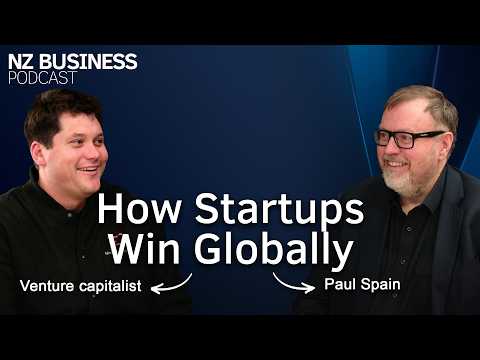
Hey, I'm Paul Spain, futurist and Chief Executive at Gorilla Technology. I love helping individuals and their organisations to achieve their very best, and the New Zealand Business Podcast is all about this by helping you learn from some of our highest achievers. In this episode, we're joined by Lachlan Nixon, who's founder and managing partner of Motion Capital, one of New Zealand's specialist climate tech venture capital firms and one of the newer VC firms on the block. Lachlan has spent more than a decade working in the world of venture capital, helping innovative Kiwi companies secure the funding and support needed to grow on the global stage. Since launching in 2023, Motion Capital has grown into a dedicated climate tech investment fund focused on backing companies that help reduce emissions, whilst building commercially successful businesses. New Zealand Business Podcast is brought to you by One New Zealand alongside Gorilla Technology, making tech enablement and cybersecurity easy for startups through to mid-sized firms, and by Outrun Global, remote staffing to help your local teams work smarter, not harder. Before we jump into the interview, If you work in a midsize or smaller organisation, have you figured out how to make your team more efficient and effective with AI and automation? If not, talk with Gorilla Technology about a tech enablement audit today. All right, let's jump in.
Paul Spain:
Lachlan Nixon, great to have you on the podcast. How are you today?
Lachlan Nixon:
Very good, Paul. Thanks for having me.
Paul Spain:
Thanks so much for joining in studio. Look, great to Have you here, like to go back a little bit to the beginning. Tell us a little bit about where your journey started, where you grew up.
Lachlan Nixon:
Well, I grew up travelling all around the world, really. I came back to New Zealand with a British accent from all the international schools I'd been going to and went to Auckland Grammar. And I've been in Auckland largely my career since. So yeah, yeah, good Auckland boy.
Paul Spain:
Yeah. So what were those things that took your attention as a youngster that you see maybe, you know, in some way connected to where you've ended up?
Lachlan Nixon:
I had a few kind of starts in various directions. I did a law degree and a music degree, which was an interesting combination. I was very passionate about music at the time. The law degree was to keep my parents happy, but probably also my options open.
Paul Spain:
Yes, yes.
Lachlan Nixon:
But decided I didn't want to pursue the kind of legal pathway. And at the time became very interested in tech and more specifically startups in New Zealand pursuing tech. And I've been chasing that dragon ever since. 2014 was my first start in the industry.
Paul Spain:
Yeah, fantastic. Walk us through maybe how you got that role and what you ended up doing, because it's pretty fascinating.
Lachlan Nixon:
Yeah, so I mean, more specifically, I've been in venture capital funding and trying to find funding for startup companies in New Zealand. I think early on in my career, I noticed after a holiday actually to California, I stumbled across a startup conference that seemed much more exuberant than anything I'd seen back home. And noticed as well there was a whole lot more money sloshing around for companies that I thought weren't actually as credible or just as credible as those back home. And came back thinking that capital was in short supply for good companies in New Zealand and saw that as both a challenge and an opportunity. If someone And a good way to spend a career trying to solve a problem to provide capital to the great Kiwi tech startups. And yeah, I still believe to this day that New Zealand really punches above its weight and we can talk about different sectors of tech and examples of that. But generally I think we have world-class tech down here that is fundable. And the capital markets have been, well, have dramatically changed in my career since starting them, starting for these companies.
Lachlan Nixon:
I spent the first kind of 8 years of my career at a biotech investment firm. The idea being that New Zealand, we've got a biology-based economy, we export a lot of primary products. It made sense for New Zealand to be adding value to that industry with technology and something that would make sense offshore. And so I spent several years there doing biotech and life sciences startups, funding those, trying to export their products to international markets, both actual markets and capital markets. And then started Motion Capital with quite some earnest in 2023. So Motion Capital is a venture capital fund exclusively focused on climate tech. We look for technology companies that help the world avoid or reduce emissions and have a commercial opportunity to exploit that with technology. So We've been going 3 years, team of 5, just down the road here in Ponsonby investing our first fund, which is a $27 million venture capital fund.
Paul Spain:
Yeah, fantastic. Now talk, maybe you can talk a little bit about, you know, what experience you gained in that first role, first company you were with, Pacific Channel, and, you know, what were the foundations that you really learnt there that you sort of walked away with so that you were in a position to launch Motion Capital?
Lachlan Nixon:
Yeah, well, it's fairly formative. Lots of successes, lots of failures, which is inevitable, I think, when working with startup companies. You kind of wear those as a badge of honour, actually. I mean, one of my biggest learnings so far in my career is just working with good people. I describe a startup company as a marathon on the obstacle course.
Paul Spain:
Mm-hmm.
Lachlan Nixon:
And I've learned such marathons are just no fun and not anywhere near as rewarding if you're not making sure you've got got great people in with them. So I'm very sensitive and attuned to that these days. Also learned that cash isn't the only problem with doing this in New Zealand. Often the investor perspective is you come into these companies with cash, so at least at the start of your investment, cash isn't the problem. But developing connectivity to foreign markets, I think, is still a bottleneck. in New Zealand, getting the technology into the hands of the customer, which is almost invariably offshore if these companies are going to be massive, is still a massive challenge. World's getting smaller with Zoom calls and weightless exports and all these things, but it's still a practical challenge, I think.
Paul Spain:
Yeah. How have you seen or been involved with solving that for varying startups? What have been the the standout approaches that are being taken to take New Zealand out to the world. Because yeah, it's no good if we're creating something incredible here in New Zealand, but nobody on the global stage ever knows about it and gets the opportunity to be involved.
Lachlan Nixon:
Yeah, and look, I think that can be something Kiwi entrepreneurs can succumb to as well. We can be a little bit of an echo chamber around here where You know, there's some great— there's a great product, maybe a great technology, and everyone in New Zealand gets very excited before really talking to the market.
Paul Spain:
Yeah.
Lachlan Nixon:
You know, a lot of our thinking sounds backwards actually, but, you know, we like to start with the customer's problem and then think about a technology that might solve it. You know, I've been involved in several ventures which have unfortunately been unsuccessful because they've started the other way. You know, they've started with the technology and it's a bit more of a push effort to try and find a market application. for it. The best ventures I've been involved in and the most successful have gone one step further as well. They've— I like to talk about baking cakes a lot as a metaphor.
Paul Spain:
Yeah.
Lachlan Nixon:
But the metaphor I like to use is sometimes you have to actually sell the cake before you bake it. You sell the cake, you sign the contract or letter of intent or something with that customer to confirm their interest in it. And then you come back and you raise the capital, do the work to actually bake the cake to deliver on that contract. I think the most sophisticated entrepreneurs, think that way. You know, they're trying to solve for an eventual customer problem actually before they spend, you know, vast resources and time making the product and then doing all the rigmarole associated with that. So I suppose another big learning, but I think a key one for New Zealand, is to, you know, really understand that customer problem and, you know, validate it as early as possible.
Paul Spain:
You know, when you look at the market, you know, New Zealand, you know, if you're looking at the global market, New Zealand is is a tiny blip in that. Is it critical to go to the US? Are there, you know, are there things that you've landed on in terms of what should be the default, you know, approach for taking things out to market? I know every, you know, every situation is a little bit, you know, different, but are there some sort of rules or guides you've landed on from that perspective?
Lachlan Nixon:
Yeah, I mean, usually, you know, as a venture capital investor, we are investing quite early and we're taking quite a bit of risk. And given that risk, we do need a large reward to justify it. And typically companies aren't able to grow large enough staying in New Zealand to justify the risk. The exception being, I mean, in our area, the energy sector is very large in New Zealand. There's potential for maybe a company just selling into New Zealand becoming a billion-dollar-plus outcome. But generally I would say, They have the world in their sights. I'm starting to see that as a bit of a feature and not a bug for New Zealand. We've got to think global from the outset.
Lachlan Nixon:
The entrepreneurs know intuitively that when they come to an investor, they have to be talking globally. The Australians can get distracted with their home market for a couple of years and don't immediately think about markets outside of Australia. I think for some of their companies that can become a natural kind of ceiling for them. But you mentioned the US. I think it's been quite interesting changes in the last couple of years, you know, for fear of getting into politics, but I do think the US used to be the kind of nirvana and, you know, Kiwi entrepreneurs were inevitably heading to the West Coast and, you know, that all seemed like the next port of call after New Zealand. for tech. These days, that's not so much the case. I was in a board meeting a month or two ago, and it was a company making a decision about probably when to commit to the US and the various resources associated with doing that properly.
Lachlan Nixon:
And the sentiment was, maybe not now. What about Asia or Europe or Australia in the meantime? So there's a lot going on in the world, but I think these things are changing for Kiwi entrepreneurs.
Paul Spain:
And how do you look at shifts within the venture capital world and the startup world? What in your time have been the key shifts to date?
Lachlan Nixon:
Oh, I mean, it's completely night and day. And so I talked about that insight I had in 2014. I wouldn't say New Zealand actually made much progress on solving that issue until maybe 2021. 2022. There were a few groups around, Movac, Icehouse, Sir Stephen Tyndall was prolific and has been for many decades. But it wasn't until 2021, 2022, where I think we had the dual impact of a low interest rate environment and the New Zealand government coming into venture capital. So you'll be familiar with the Elevate Fund. It was a $300, now $400 million government fund of funds.
Lachlan Nixon:
That has stimulated well over $1 billion of fresh venture capital fund commitments since then, which is a dramatic increase on the size of the capital available in the market in a short period of time. All of a sudden, venture capital is a real asset class. There's real people having a career in it. For the first several years of my career, it was— you could literally count on 2 hands the number of professionals. You know, now there's grad programmes and people coming through and there's, you know, a whole career path just being in New Zealand venture capital, which is an astounding change.
Paul Spain:
Yes.
Lachlan Nixon:
Starting to see real pockets of returns. And that's, you know, really important for our sector. It's, you know, obviously investors give us money, they want something back in return. And not just that, we are taking big risks, so we need to deliver big return. And yeah, there is, you know, I've had success in my career where, you know, really the only thing that gets you, keeps you going is either, or keep justifying raising the money is delivering money back to people. So there's luckily, and through no insignificant amount of hard work, you know, great examples of that happening. And we're really starting to see specialisation as well. There's, you know, I think Motion Capital, we're obviously a very specialised firm, we're fairly myopic actually in what we're looking for and what we're aiming to invest in.
Lachlan Nixon:
But everyone's starting to really focus on their stage or sector or, you know, place within the local market where they might play.
Paul Spain:
And what can you share in terms of the sort of, you know, typical timeframes for seeking investment and then, you know, how long That is quite typical for a fund to stay involved in a particular investment.
Lachlan Nixon:
Oh, I do like talking about the business model and the structure of what we do because for some reason it's unnecessarily opaque. Or maybe it's— and it really does affect how venture capital funds behave. And so it's worth knowing, you know, we run 10-year funds, which is a long amount of time. But, you know, in startup world, that's how long it takes. We have the opportunity to extend that 2 years with mutual agreement with our investors as well. But within that 10 years, we have a 3 to 5 year investment period as typical, sometimes on the shorter side, sometimes a little bit longer depending on the opportunities that the fund can see. And then there are a balance of the time for the fund as it moves more towards a kind of harvesting period. So, you know, we've committed to our investors to get them a cash return prior to 10 years.
Lachlan Nixon:
That affects the kind of investments we make, their stage, their timeline, and, you know, probably our behaviour as well. And on the business model side, we charge what's called a 2 and 20 business model. We charge a 2% fee on the committed capital of the fund per annum, and then a 20%, what's called a carried interest, which is essentially a profit share on the eventual investments. Yeah.
Paul Spain:
I'm sure it'd be interesting to hear how you got from being employed within Pacific Channel to launching Motion Capital. Maybe you can break down that journey for us.
Paul Spain:
Yeah.
Lachlan Nixon:
I've become really passionate about the response to climate change, and I see it as one of the defining themes and macro trends and opportunities of the 21st century. If you're looking for a long-term investment theme, in which everyone in my industry is, it seems to me to be a quite obvious one to pursue. And I'm probably, I'm a greenie, but probably my motivations are more in seeing that kind of long-term trend and opportunity. And that's how we really frame it to our investors as well. We see decarbonisation as a driver in the global economy and something that could be enabled by tech. And then my other motivation was not just that opportunity for the world, I suppose, but also for New Zealand. So when we started Motion Capital, there was a great crop of these climate tech companies coming through. And there's a little bit of heritage in New Zealand in this area as well.
Lachlan Nixon:
We've had some success. We're well known offshore with companies like Lanzatech.
Paul Spain:
Yeah.
Lachlan Nixon:
For example. And the more and more I thought about it, you know, there wasn't really much focus at all. in finance or venture capital on climate investment. And if you talk to anyone offshore and say, oh, prior to Motion Capital, there was not that much climate investment, they're like, what? Aren't you guys just really focused on that? Doesn't your empathy for the environment and your national brand proliferate through business at all? And I don't actually think it really does. But since starting Motion Capital, speaking to people offshore about what we do, it makes sense to them. It's the kind of business the world expects from us, I think, actually.
Paul Spain:
Yeah.
Lachlan Nixon:
down here.
Paul Spain:
Yeah. Yeah.
Lachlan Nixon:
And it's not particularly cool at the moment, you know, the area that we're focused on. But, you know, we still think New Zealand can long-term, you know, really lead the charge in the area. And it comes in and out of favour, but in the long-term it's, you know, really, really cool and I think great focus for New Zealand. And these, you know, companies that are creating high-value jobs, high-value exports, I think in the sustainable industries of And so that was the other motivation, you know, New Zealand's economic development. And, you know, I think if we're going to be focusing where we should develop the New Zealand economy, you know, clean green tech ticks a lot of boxes.
Paul Spain:
Yeah, yeah. How does that play out in terms of making investments? Because I guess a startup can choose to work with, you know, someone specialised like, you know, Motion Capital or another VC that's specialised in that area. if their business is climate change related. However, they've also got access to everybody else. So, but you are kind of limiting, I guess, what you do. Have you found that to be a problem or are there plenty of opportunities coming through in the market for you to then get the lookout for kind of the cream of the crop, as it were?
Lachlan Nixon:
Yeah, I mean, we definitely haven't been feeling like there's a lack of opportunity. And to prove that is in the numbers. The fund that we have is able to invest offshore as well, but we've largely made our investments in New Zealand and we've just had our hands full with great opportunity here in New Zealand. And I think all of our companies have some kind of environmental aspect to their product, but we are very focused on the commercials. So our viewpoint is that in order to have the most climate impact, these companies should be wildly profitable and able to grow quickly and get their products out into the hands of customers. And so we kind of see those 2 things as there's no trade-off between the climate impact and the return, actually, if you get it right. And usually it's done right where the environmental impact is inherent in the product and that product has a high margin and is able to, you know, the customer wants to buy it. That's where I think the kind of magic middle is for us.
Lachlan Nixon:
We have that kind of lens, if you like. We don't see it as narrow in that I previously described as a bit of a theme. And that theme can be applied to actually most parts of our economy. So we're investing in energy, we're investing in industry, we're investing in food, we're investing in transport. These are all quite big sectors. And so yeah, we've been really pleased with the quality and quantity of the companies coming through. And then you asked about collaboration kind of amongst the investors. It's getting more competitive, and I think the Investors are inherently competitive with each other, which is really healthy.
Lachlan Nixon:
But we do collaborate on the startup companies. So the best companies coming through will pretty much get to dictate who they work with. And we will actually be pitching everything else other than the money. The money's just a commodity. It's a reason that we're in the room. But we'll be saying, hey, we've got a specialized focus on this. We can help you. We can introduce you to this founder who's just gone through that challenge in our portfolio.
Lachlan Nixon:
We've got our finger on the pulse of the various opportunities for these kinds of companies locally and offshore. We've got the relationships with the follow-on and downstream investors in this sector. So we are trying to unlock all of that softer stuff around our investment, and that's how we pitch ourselves to founders.
Paul Spain:
Yeah. And how much difference do those things make?
Lachlan Nixon:
I like to think a lot. We're typically invited to join the boards of the companies we're in, and we're pretty actively involved, not day to day, of course, but board meetings. And outside of that, we would be trying to support the company on the biggest strategic challenges at any one time. For our companies, I think the follow-on capital can be quite transformative, and we do spend a lot of time focusing on the subsequent transactions. Our commitment to our founders is that we will try just as hard as them to help them raise the next round. And I think they've, there's several examples of that being quite transformative as well. And now we've got about 13 companies in the portfolio. It's really nice that there's a bit of a cohort and they're all working really closely with each other.
Lachlan Nixon:
They all know each other. There's a group chat. And actually earlier this year, I went to the wedding of the founder of one of our companies with the lead chemist of another company. We don't provide a dating service at Motion Capital, but that should show you how closely these companies are working together.
Paul Spain:
Yeah, that's brilliant. That's brilliant. And for those that, those that aren't familiar, maybe you can just sort of, you know, break down, you know, what the investment rounds, you know, look like from the earliest stages through to when you might exit. So what's that typically look like within the startup? And I know a lot will be familiar, but yeah, not everyone will be.
Lachlan Nixon:
I'll use the terminology and explain what I think those words mean because they've changed over time a little bit. But we consider ourselves to be a seed to Series A investor. What I mean by seed is we like to see a team in place, a product well conceptualized, if not in market, and that market really well understood, which I said to us earlier is a really key thing for us. Doesn't need to be in meaningful revenues, certainly at seed stage. And, you know, a lot of our deeper tech companies are pre-revenue for that stage and quite a bit later on as well. But they certainly need to kind of have a shape and have some great people pursuing that. We'll then continue to invest up until a Series A. To me, a company is, and this is perhaps applying some of specifically to our sector as well, a climate tech Series A company.
Lachlan Nixon:
People describe the Series A capital raise as a just-add-money capital raise in that you need to have all aspects of the business figured out. You need to have that marquee customer probably signed on and on the pitch deck. You need to have the product and starting to understand a lot of its unit economics as well as just having it as a concept. You've got a larger team and, you know, you're really starting to pursue the business side of the technology company. So we like to start with those seed stage companies and work with them on that journey to Series A. We are a small fund in the big scheme of things with $27 million. Our cash becomes less meaningful Series A and beyond. But we will be supporting seed stage rounds of between $2 and $10 million with an investment of $1 to about $3 or $3.5 million, the largest investment we've made into companies at the seed stage, and then really supporting them to get to that Series A.
Paul Spain:
Yeah. And what typically would you expect to be the number of others that are going in on an investment at those differing stages?
Lachlan Nixon:
Well, I've learned the hard way that it's pretty lonely being the only pockets around the table. So we syndicate all of our investments, which means even if we're the lead and we've done all the work, we will bring it to other investors and say, hey, we'd like you on this one too. That's for a number of reasons. One, that's in the best interests of the company and the founder. So, you know, each of these funds, people provide a different type of support to these companies alongside of the cash. It's also, it takes a village to raise any one of these children, and having more cash around the table for follow-on rounds, more strategic insight, more people, more networks, it adds to the chances of success. So we do that. Who we bring in in each round is usually up to the founder as well.
Lachlan Nixon:
You know, we'll come with a list of contacts and we'll say, I think this person could be good for this. technology because they've done X, Y, and Z. So we'll have views, but at the end of the day, it's up to the founders who they bring in as stakeholders. Usually I'd say in most rounds these days in New Zealand, it's kind of 3 to 5 investors, a little bit north and south of that, but that would be the average.
Paul Spain:
In terms of how, you know, how you get those opportunities, how do they, you know, how do you come across them or vice versa?
Lachlan Nixon:
Oh, all sorts. Well, New Zealand's small enough that it's fairly easy to be kind of kind of networked into the right places.
Paul Spain:
Yeah.
Lachlan Nixon:
And the interesting thing, you know, I mentioned LanzaTech, for example, but there's some real kind of threads to pull in New Zealand, if you like, in our sector. We've just made, I think it's 5th investment in Canterbury. Actually, for the Cantabrians listening, we've got more investments in Canterbury than anywhere else in the country. But it's partly, I think, because of the fantastic engineering school down there, which has led to a bunch of spin-out companies, all of whom work together, talk to each other, You know, we're flying down once every couple of weeks for a board meeting and you just kind of, it's quite a natural progression of your own reputation and contacts with, you know, just, it's a tight-knit kind of sector.
Paul Spain:
Yeah. Yeah.
Lachlan Nixon:
But then other than that kind of hand-to-hand combat, we do try to do a lot of marketing. If anyone listening is a climate tech founder, please reach out to me, lauchlan@motioncapital.co.nz.
Paul Spain:
Perfect.
Lachlan Nixon:
And yeah, try to speak at the right conferences and all these things, get our Get our name out there.
Paul Spain:
Yeah, great. Well, maybe we can delve into some of your portfolio companies. Tell us who you've invested in and a little bit about them.
Lachlan Nixon:
Well, we love all our children equally, of course, but to highlight a few that we are particularly focused on at the moment, a company called Zethos, one of the aforementioned University of Canterbury mafia, if you like. They have developed a technology to take zinc dust, which I'd never heard of, to be fair, but it's a significant byproduct and hazardous byproduct of steel galvanisation. And currently the world largely exports this hazardous product to these large centralised coal-based plants to reduce it back down to zinc. Zethos has got an alternative approach. It's local, so it sits right next to a steel mill. It's also 95% less emissions, great, but it's 50% cheaper for the steel mill. And so—
Paul Spain:
That makes it an easier sell?
Lachlan Nixon:
Yes. And look, that's been my perhaps cynical interpretation of human nature that to get these climate tech products out there, you have to make them cheaper. And so they've signed up Nucor, which is the world's, well, Fortune 500 company, the largest steel mill in North America, who have really laid out a pathway for them to deploy their technology in North America. So they're one of ours that are really focused on the North American market. Depending on what time this podcast comes out, they will have announced or are just about to announce a really large and successful Series A capital raise. So we see that as a bit of a success. Talking about my, the kind of support period for us, you know, we've, we led their seed round and now they've just raised that successful Series A round, which We're still involved, but it feels like it's graduating, if you like, from our little nest and support network.
Paul Spain:
Yeah, yeah. That's great.
Lachlan Nixon:
Got more examples if you'd like.
Paul Spain:
Yeah, yeah, yeah. Let's delve into some more.
Lachlan Nixon:
I've got quite a reasonably big focus on the energy sector, actually. So some really interesting energy software in New Zealand and data and AI are really starting to aggregate a lot of the value or disaggregate a lot of the value, actually. actually in energy. And we just managed to sell one of our companies to Gentrac, a company called Factor. They had a software product that allowed energy sellers to more accurately price energy contracts based on the data they had actually lying around within a Gentailor or similar energy company, but weren't able to quite properly utilise and package up to price their own energy, which is interesting. It sounds like an archaic problem someone should have solved decades ago, but no, it was ready to be solved by Jessica Venning-Bryan and Simon Poland, who were the 2 kind of founders. Kind of fairy tale story. They set it up, we invested, and 13 months later they've sold the business to Gentrac.
Lachlan Nixon:
So yeah, fantastic outcome for everyone and particularly the founders. So that was an energy software type company.
Paul Spain:
Yeah, great. What can you tell us about the numbers there? I know these things aren't always— you can't always talk about all the details, but Oh, we can because Gentrac's a listed company.
Lachlan Nixon:
So it was a $34.9 million payout overall, which is quite early in the company's journey, as I said, we'd only been invested 13 months. But our companies are always for sale at the right price. Yes, that was announced maybe 6 weeks ago.
Paul Spain:
And then in terms of the return for Motion Capital's investment?
Lachlan Nixon:
I probably can't say those numbers without permission, but it was a multiple on our investment and we were very happy with the internal rate of return on it.
Paul Spain:
Yeah, yeah, yeah. That's, that's pretty, pretty snappy to turn things around in 13 months. Yeah.
Lachlan Nixon:
And the interesting thing about that one for us actually is it was so early for us that we were able to recycle the capital. So I talked about the length of a venture capital fund. We were still within the investment period and it's not typical to achieve a cash exit within the investment period. And it means that we can actually reutilise that cash for new investments rather than distributing it to our investors. So that's been a nice little leg up that we've got.
Paul Spain:
Great, great. Yeah, maybe another one or two?
Lachlan Nixon:
Just invested in a company called Enagain, E-N-A-G-A-I-N, again in Canterbury. They've developed a biogas upgrading technology. It's actually an absorbent which was developed at the University of Canterbury. Some very smart chemical engineers, Matt Cowan and Gavin Headley. We've just spun that out of the University of Canterbury and led a $2.5 million seed round into the business.
Paul Spain:
Great.
Lachlan Nixon:
They're looking to take landfill gas, which is a very dirty kind of impure methane, and tidy it up with their purification technology into biogas, which is something that can be on-sold as a fossil gas substitute.
Paul Spain:
And what would be the market for that? Is that something with more local opportunity or very much an international one?
Lachlan Nixon:
Both. So that one has a large enough domestic market that it can be— they've got a pilot at the Burwood landfill in Christchurch, and there's about 100 such similar sites, including another one they've secured as a customer around New Zealand. But the real destination for that one is either going to be the US or France, which we think have the right conditions for their technology and the company.
Paul Spain:
That's great. How are those sort of decisions made if they're looking at, say, the US and France? How do you How do you weigh those things up in terms of, you know, what, where to, where to, where to focus?
Lachlan Nixon:
Well, it's difficult because these decisions are, it's probably someone's life's work to pursue this just in France, right? And, you know, these markets, particularly in markets like energy, they're highly regulated. It's, you know, not necessarily something you can just come in with the best product and a Kiwi accent and, you know, get it in the hands of the customer. So it requires a lot of, planning. And the US is, you know, 50+ different markets as well. And, you know, there's all sorts of different regulations, incentives, you know, all sorts of different reasons to go or not to go.
Paul Spain:
Mm-hmm.
Lachlan Nixon:
So we like to try and help the companies on that decision. Often it comes down to, you know, just doing as much market validation as possible and then making a decision. That decision's always tough because you're giving up something as well. You know, we're not going to pursue France, and there's probably opportunity for us in France if we decided to pursue the US. I've always found those decisions quite challenging, actually. Yeah.
Paul Spain:
And if you make— if you decide in one direction, it's not always easy to change track and flip things in another direction when a lot of investment and Absolutely. Yeah.
Lachlan Nixon:
And setting up in a market offshore is, you know, a commitment of the company, but, you know, often a personal commitment from the founder as well. And no, you can't do that too many times in a 10-year period. Yeah.
Paul Spain:
Yeah. Great. And if we, I guess, sort of, you know, step back from, you know, the individual investments, you know, you're looking at a collection of investments overall. What in this market would you expect to be your success rate? How do you map that out, make sure you've got enough investments so that it's likely to work well? And how have you done that for Motion Capital and what are your goals?
Lachlan Nixon:
Well, it's funny because you kind of get into venture capital and it's all, you know, you think it's all very sexy and glamorous, but I wake up in the middle of the night thinking about portfolio construction. So I don't know how I've got to the point in my life where that's what keeps me awake at night, but it's a really important part of what we do. So obviously each individual startup investment is very risky. It's probably the riskiest type of investment you could make, an investment in a startup company in New Zealand. How we manage that risk on behalf of our investors is diversification. So of course, each individual investment is highly risky, also potentially highly returning, but we will do a lot of them and that insulates our investors from the underlying risk and the exposure to usually lose all of the capital, which you can do in each individual investment. For our Fund 1, which we're just investing out of now, we're aiming for a portfolio of 15 companies. We've got 13 already now, as I said, so we've got 1 or 2 more slots available.
Lachlan Nixon:
That's quite a concentrated seed fund, actually. You'll have American seed funds of a similar focus that will have 20, 30 companies in there. We've remained quite tight, given we've got our hands full on great companies in New Zealand we want to work with. And as I say, we're fairly hands-on in supporting each company, so we don't want to dilute that. You need to make sure as a fund manager that each— my track record in my career is that about 1 in 10 of the investments I've made have been successful. Sounds like I'm a horrible investor, you know, 1 in 10. But you have to ensure that that 1 in 10 certainly covers the other 9. But really to compensate your investors for the time and the risk, each individual investment has to be returning 20, 30, 40+ times money.
Lachlan Nixon:
So when we come into an investment, we are looking for that. That's an outrageous return we're looking for, but it's really the only way you can make the maths work. And so we will try and set up a fund where we've got 15 shots on goal, essentially on that. We'd be hopeful in this fund that 1, maybe 2, and hopefully 3 hit that kind of return for us. But certainly not all of them. will be successful, but we've modelled that and structured ourselves to adapt to that, if you like.
Paul Spain:
And I mean, how do you talk to founders around these? 'Cause, you know, they're all in on just one, right? And so, you know, what's the guidance that you tend to give to founders on the realities?
Lachlan Nixon:
Yeah, I mean, it's a little bit hypocritical, right? Because, you know, the common financial advice is, goodness, don't put all your eggs in one startup basket. But, you know, then we work with these founders who absolutely put all of their eggs in one basket. So I think though, our founders are quite relieved to hear me say things like, you know, we don't expect, we only expect 1 in 10 to be, you know, a runaway success. They obviously want to be that 1 in 10 and, you know, we're aligned and they're incentivized to achieve that. But, you know, I'm not going to be, we're still going to be friends. Because if you lose the money, I think they're quite relieved to hear that. And it also just brings a good dose of reality around failure, I think. I still think Kiwis can improve the cultural discussion around failure in New Zealand.
Lachlan Nixon:
It is not a fait accompli on someone or an opportunity or a particular sector if one startup company fails in New Zealand. I still think we have a cultural apprehension around failure, which is fairly deep-seated, I think.
Paul Spain:
Yeah. And the number of companies, because they're not, you know, you're not going to get a complete failure of 90%, are you? It's, you know, they're going to be somewhere in between the ones at the top end that you get an incredible sort of multiplier on. And yeah, some that will, you know, completely hit the wall. How does that tend to look?
Lachlan Nixon:
The problem is the liquidity. So when I said 1 in 10 of my investments have been successful, yeah, you're right, the other 9 haven't crashed and burned in a ball of flames. There's been a little bit of that, but most of them just don't turn out to be the high-growth company that we all expected and then achieve this massive liquidity outcome. And that's what confuses the maths for a lot of people and for these things. We've been asked by our investors for cash, we have to give them back cash to be considered a good investor. And it's really only that 1 in 10 that achieves that. Liquidity is probably the biggest problem in private markets, really. The biggest challenge, perhaps.
Paul Spain:
Maybe you can talk a little bit to how startups should sort of operate in terms of managing capital and how the sort of challenges that they can get into?
Lachlan Nixon:
Goodness, have we got a bottle of wine? That's a big topic. New Zealand has an advantage in discipline and efficiency around capital. You know, we've managed to get a lot done off the smell of an oily rag. And that has a real advantage in the earlier stages of a company's life. But at a certain point, you know, when you're kind of onto something and you know there's an opportunity, Sometimes you just have to go big or go home. And New Zealand probably doesn't have the kind of growth capital still, in my view, to really certainly pursue certain types of ventures. Like, it's not a good place, I don't think yet, to raise the most money and go fastest to market and use that entrenched position to block out your competitors. You know, I think there would be very few examples of Kiwi companies achieving that.
Lachlan Nixon:
And it's because of that, I think the venture capital investors have navigated towards this kind of deep tech area. So out of any venture capital market in the world, this is a real stat, New Zealand has the most skew towards deep tech by capital invested. That's over half of our capital market. And that's because with a smaller amount of capital, you know, the investors can see a reason that these companies are going to win. They've got a differentiated patent, a differentiated product, and that might be why they might win over a company in Silicon Valley rather than more money.
Paul Spain:
Yeah.
Lachlan Nixon:
But the journey is really quite interesting and full of pitfalls. There's danger in raising too much money at too high of a valuation. There's danger in raising not enough money at too low of a valuation. There's danger in the capital raising getting ahead of the business building or, you know, vice versa where your competitors get ahead of you. So capital planning and, you know, raising the right amount of money at the right time from the right people at the right valuation, it's a little bit of a dark art, but it's really important.
Paul Spain:
Yeah, you mentioned deep tech. So, you know, who would stand out to you as our most interesting deep tech firms that have really, I guess, set the examples. I guess we've got Rocket Lab there at the top. You mentioned LanzaTech. So yeah, and how do you break down deep tech for folks? How do you describe it?
Lachlan Nixon:
Yeah, well, look, I mean, touching on Rocket Lab, because I think as of the other day, Rocket Lab's market cap is about $85 billion New Zealand dollars, which by the way is more than Canva and Atlassian combined, which are the 2 largest ever outcomes in Australian tech. So we have one company worth more than, you know, their top 2. And obviously it's in deep tech, you know, competing internationally with a focus on the US. I think it's dramatically changed the maths in the New Zealand startup ecosystem overall.
Paul Spain:
Yeah.
Lachlan Nixon:
This is a game and a sector of outliers, right? And Rocket Lab is a true outlier. But given it exists and it's just down the road, and my colleague Monique, her partner is one of the early employees at Rocket Lab, given that proximity, investors like us can believe that there is going to be another outcome that we can see and invest in of a similar kind of outcome. And so that just changes the whole maths and I think momentum and credibility and how bold the sector can be. All of a sudden I can go to my investors and say, you know, I think we're going to achieve a $100 billion outcome and not sound as outrageous as I would've a couple of years ago, which is a big thing.
Paul Spain:
Yeah, yeah, yeah.
Lachlan Nixon:
Any other ones in that deep tech Yeah, I mean, we focus a lot on industrial innovation and energy innovation. There's a lot of great technologies in New Zealand. Actually, I think you can almost trace it back to Landza Tech. You know, there's people that we work with that were original Landza Tech employees who are now starting their second or even third business in this area. Obviously, New Zealand, you know, space tech is now a thing. I still think we haven't really managed, other than Halter actually in breakout successes in agtech. Agtech can be hard to scale globally given New Zealand's pasture-based farming system.
Paul Spain:
Yeah.
Lachlan Nixon:
But Halter has certainly managed to achieve that. And there's real threads to pull in terms of fintech around Xero or FNZ as well as another great fintech example. So we're starting to see the fruits of a lot of successful entrepreneurial activity starting to snowball. And New Zealand genuinely has pockets of world-class innovation and tech all around the place now.
Paul Spain:
Yeah. I guess another aspect to your world is, I guess it's been a small pocket of people that have had that opportunity to make early-stage investments in startups. How do you look at the future of that? I guess we are seeing investment become more, you know, democratised as time gets on? It does, it has got easier, the likes of, you know, Sharesies and so on within the New Zealand market and, you know, other tools, you know, globally. How do you look at that side of it?
Lachlan Nixon:
Yeah, it's something I'm passionate about actually, and it's a big challenge. So the overall challenge in getting any capital together for this kind of thing is the long timelines. The outputs lag the inputs by about 10 years.
Paul Spain:
Yeah.
Lachlan Nixon:
And so it requires some very strong-minded, perhaps maniacal individuals to say, we should invest this amount of money now for this kind of outcome in 10 years. And then that problem is compounded with— there's a little bit of a chicken and egg problem. People like me, we are only as good as our track record. of the previous investments we've made. But to get a track record, you needed to have had cash to invest. But to get cash to invest, you needed to have a track record.
Paul Spain:
Yeah.
Lachlan Nixon:
So there's some real inertia actually in overcoming that. I think in the last 4 or 5 years, the venture capital community in New Zealand has overcome that inertia. And, you know, we are now in a kind of new phase where we're able to raise cash, distribute returns to our investors, and keep that cycle self- perpetuating, hopefully without much more government involvement.
Paul Spain:
Mm-hmm.
Lachlan Nixon:
But then on the kind of democratizing access to venture capital is very difficult. So groups like ours, the minimum investment for our first fund was $250,000, which is a lot of money for most, if not all people. The reason we set it at that, which is actually lower than some of the other funds, is it's a long way to raise $27 million, which we did chasing $10K checks.
Paul Spain:
Yes.
Lachlan Nixon:
In fact, it would be almost impossible to manage as well. There's also some legal restrictions. So, you know, our fund is open to wholesale investors only. It's a whole other process and quite a bit more legal requirements to offer our fund to retail investors. There's been a couple of great examples of funds that have pursued that. So we're close with Pūnakaiki. They've got an evergreen retail investment offer. Icehouse Ventures have done a great job of getting this kind of asset class into other investors.
Lachlan Nixon:
And yes, Sharesies has really led the charge on democratising access to investment broadly.
Paul Spain:
And KiwiSaver, I suppose, is the other important piece in New Zealand, right?
Lachlan Nixon:
Absolutely. I think there's $143 billion in KiwiSaver and growing every day. Now that KiwiSaver is of that kind of size, and now that my sector has proven itself in a lot of ways. Yes, I do expect to see a lot more KiwiSavers investing in venture capital. We're lucky to have the support of Pathfinder, which is, you know, an ethical-focused KiwiSaver, obviously strong alignment there with the climate tech theme in focus. And, you know, we're actually a lot behind other parts of the world in that. You know, the Australians have, I think it's much north of 5% of their superannuation schemes are invested in domestic venture capital. New Zealand would be less than 2%.
Lachlan Nixon:
So we think there's a lot more growth to come from KiwiSaver. So, you know, if your retirement savings, usually with one of their growth funds, I think you'll start to see those growth funds investing in local venture capital funds a bit more often.
Paul Spain:
Yeah. What would you say have been the hardest parts of your journey so far? That's often where the best learning is.
Lachlan Nixon:
It was very difficult to set up that first fund and primarily because of that chicken and egg problem that I talked about. So that's very palpable for me. We managed to kind of get through that by, I think, just delivering on what we said we were going to do. So we had an initial crop of investors that were willing to support us and we were able to kind of get going with that small amount of money and then continued to update our investors and potential investors saying, this is what I said I was going to do, this is what I have done, and eventually got to a decent fund size. That was exceptionally challenging. It's also a challenge to build the plane as you fly it. So as we were raising that fund, we were also investing out of that fund, a particularly busy period. We've been privileged and delighted to be working with fantastic founders who have been making us look good, if you like, to our investors.
Lachlan Nixon:
And so I'm thankful to be through that period. Our next fundraise, I'm hopeful, I'm confident will go a lot better given we have now a bit more of a track record and reputation as a business. But setting that first fund up is always a challenge. Yeah, it's been a labour of love. supporting the companies as well. As I say, each one of them's a marathon on the obstacle course, and we like to be there on the obstacle course with them. There's been, you know, a lot of challenges as well as, you know, opportunities for these companies. And we wouldn't be as good of investors if we weren't trying to identify those challenges and support the people and the companies with them.
Lachlan Nixon:
So yeah, there's plenty of easy ways to make money. I'm confident on it, but luckily we're passionate about it and And having fun too.
Paul Spain:
Yeah. Fantastic. So, you know, what's next on the fund side?
Lachlan Nixon:
Well, we only closed the last fund towards the end of last year. So we're currently kind of heads down between funds, if you like. But, you know, we are a fund manager. We will raise successive funds, I think, on fairly similar strategies and keep to our climate tech focus. Yeah. Expect to hear more from us on that maybe next year. It will be imaginatively named. Fund 2.
Paul Spain:
That seems to be a reasonably common approach.
Lachlan Nixon:
Well, how does anyone know you've done a fund before if you don't have the Roman numerals?
Paul Spain:
Yeah, yeah, yeah, yeah. Very good. In terms of any tips and advice for those who are wanting to get more exposure to startups, to venture-type investments, maybe that, you know, they haven't, haven't done it before. What would be your, your tips and guidance?
Lachlan Nixon:
Yeah, well, if you're in the privileged position to have a bit of spare cash and you want to maniacally invest in some startup companies, you know, make sure that's not the only cash you, you have. And, you know, consider it the amount you're willing to lose. I would make sure that you pursue one of two directions. As I said, diversification is That's absolutely the core strategy. There's people like me with a theme and like some experience and, you know, but really what makes us look good is the diversification. And then I can point to the 1 in 10, not the 9 in 10. So to get diversification, there's 2 ways. You either outsource by committing to a fund and that's kind of the, you know, really what we offer investors.
Paul Spain:
Yeah.
Lachlan Nixon:
We'll do a professional managed service over 10 years and diversify your cash across 15 companies in this first fund. Or you can invest in startup companies directly. There's some fantastic angel groups in New Zealand, all of whom we work with closely. Just please don't get excited and invest all of the money in the first one you see. Just plan that you're going to do at least 15 and reserve the capital for the next 14 that you get excited by and do it that way. But really, the pitfalls when people start on that journey and don't finish it? You've got to really do 15 or zero, I think, to do it right. It's only north of 15 actually where the diversification maths start to really work in your favour. Gotcha.
Lachlan Nixon:
So that would be my suggestion.
Paul Spain:
Yeah, that's great. Lots of insights packed in there, Lachlan. Anything else you think we haven't covered that you'd like to mention?
Lachlan Nixon:
Thank you. It's been a far-reaching discussion. Next time we'll have to do it over a bottle of wine.
Paul Spain:
Sounds good. Thank you very much, Lachlan Nixon. Great to have you on the, on the show, and we'll look forward to following your progress and seeing what's next.
Lachlan Nixon:
Thank you, Paul.
Paul Spain:
Okay, cheers.
Paul Spain:
Well, I hope you enjoyed hearing from Lachlan Nixon on this episode of the New Zealand Business Podcast. It's been brought to you by One New Zealand alongside Gorilla Technology, making technology enablement and cybersecurity easy for smaller businesses, startups, and mid-sized firms. And by Outrun Global, remote staffing to help your local teams work smarter, not harder. Be sure to listen in to our other episodes featuring many of New Zealand's most incredible leaders. Brooke Roberts from Sharesies, Sir Peter Beck of Rocket Lab, Cecilia Robinson of My Food Bag and Tend, Sir Steven Tindall of The Warehouse and K1W1, and many more. And be sure to share this episode with a friend or colleague who you think will benefit. Well, that's us signing out. This is Paul Spain.
Paul Spain:
I'll catch you again on the next episode of the New Zealand Business Podcast.
Paul Spain:
See you then. The New Zealand Business Podcast, brought to you by Gorilla Technology, your strategic and proactive IT partner.