Read the full transcript
Transcript is computer-generated and may contain errors.
Paul Spain:
I'm Paul Spain, Futurist and Chief Executive at Gorilla Technology.
I love helping individuals and their organisations succeed. The New Zealand Business Podcast is all about this – by helping you learn from some of our highest achievers.
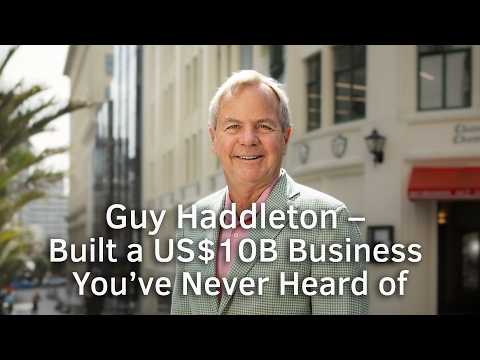
Today I'm joined by Guy Haddleton, entrepreneur, tech leader and investor who has spent decades building, backing and scaling businesses around the world.
Paul Spain:
Guy Haddleton and his late wife Sue helped bootstrap their first company with just a hundred dollars drawn from a credit card. That company, Adaytum, would eventually sell for 160 million US dollars. Guy later co-founded Anaplan, which went public on the New York Stock Exchange in 2018 at a valuation of around 3 billion US dollars.
In 2023, Guy and his late wife Sue were recognised for their broad contribution to New Zealand's technology sector when they were named Flying Kiwis and inducted into the New Zealand Hi-Tech Hall of Fame.
Paul Spain:
The New Zealand Business Podcast is proudly brought to you by One New Zealand alongside Gorilla Technology, making tech enablement and cybersecurity easy for midsize and smaller organisations. And by Outrun Global, remote staffing to help your local teams work smarter, not harder.
Paul Spain:
Well, Guy, great to have you on the New Zealand Business Podcast. It's a real privilege.
Guy Haddleton:
Love the thought of being here.
Paul Spain:
Thank you.
Guy Haddleton:
Sharing the story, sharing the journey.
Paul Spain:
I always do love to start a little bit at the beginning. So maybe you can tell us a little bit about, you know, where you grew up and what that looked like.
Guy Haddleton:
I'm an Auckland boy, born Mount Eden, grew up in Remuera, initially went to school in Auckland, then Cambridge, and then back to Auckland. So Auckland boy through and through.
Paul Spain:
And anything that really sort of stands out from your upbringing that you connect through to what you've ended up spending your life doing?
Guy Haddleton:
Oh, actually, yes. I hadn't thought about it like that. My father was a naval officer and that probably semi-influenced some of my military career. And then my mother was a an entrepreneur, if you can have such a word in 1955. So yes, both of them shaped me in different ways.
Paul Spain:
Great. Great. And what do you think stands out for you now, kind of looking back at that time and how you were shaped?
Guy Haddleton:
I guess I fulfilled my potential. And that is probably the way to say it. I've had a great life. I've engaged in many activities, engaged in many businesses, engaged in many pursuits. I've had a lot of fun. Life is good. Life's been a great journey. And I think we get out of life what we put into it, and I put a heck into it.
Paul Spain:
Great. And you mentioned your mother being an entrepreneur. Were you picking up lessons from You know, from her during your upbringing that, you know, you have carried forward at all?
Guy Haddleton:
I'm not sure I was conscious of that. But I think the subconscious helps a lot. It sort of became part of my DNA, always looking at what can we do here? Can we import some antiques from the UK? Or can we start a manufacturing business in furniture? Or shall we buy some property and do some houses up? There was always something new on in the house. And so that was just part of my background. And we are a function of who we are, of how we are raised.
Paul Spain:
Right. So those discussions would be happening kind of around the dinner table or what have you in the home. So you were actually, you were subtly getting trained up.
Guy Haddleton:
Yes. And the strategy, the thinking of it, should we do this? Shouldn't we do it? It was not a closed household at all. Yes, looking back, that was probably quite productive.
Paul Spain:
Great lessons in there for, I guess, all parents to think about that sort of impact that can actually be had by bringing business things into the everyday conversation.
Guy Haddleton:
Well, just bringing anything. I think the point is you have a dinner table and you have inclusive conversations around the dinner table as to what's going on. It doesn't have to be business, it can be sport, it can be just life, life lessons. And I fear today, if you go into a restaurant and you see most people in a restaurant, they're all looking at their iPhone, not talking to each other. And that's a bit of a tragedy.
Paul Spain:
It really is, yeah. So from school, how did you progress into the military world? Walk us through how that looked.
Guy Haddleton:
Well, I went to university to do law and commerce. And I guess that was my mother's dream or my parents' dream, not mine. And so I bailed after 18 months when I saw an advertisement in the New Zealand Herald for folks to come in and try and do the SAS selection course. They weren't getting enough people to pass at that stage. And so I just applied and about 130 of us Turned up at Papakura Camp one day and about 4 days later, there were only 2 of us left and one passed.
Paul Spain:
Wow.
Guy Haddleton:
Or one finished, more correctly. Yeah.
Paul Spain:
And so how hard was that process if one out of 130 was able to get through it? Why do you think you succeeded?
Guy Haddleton:
I'm just obstinate. Nothing special, there is nothing special at all. I think you have just got to put your head down and say, I am going to give up. And you might be a bit tired and you might not have much skin on your feet or you might not— you are pretty shattered. You might have had 2 hours sleep in 3 or 4 days and you probably had no food and obstacle course on day 3 after having done it on day 2 and day 1, you get a little bit tired. And the idea is very simple. You have to stay there and their job is to try and persuade you to leave. And they said, yeah, generally they succeed.
Paul Spain:
When you look back on that time with the SAS, which I guess New Zealand's sort of form of special forces, what are the big things that you think kind of have carried through into your work? Because, you know, you've remained somebody that's, you know, not run-of-the-mill in terms of the results that you've got. And so, you know, I think you getting through, you know, was obviously— there's something of an indicator there of the future.
Guy Haddleton:
I think what I learnt in the SAS is that it's a very small organisation, but it's a very driven organisation, clearly. There's a skill set there that is incredible that they finely tuned. And the teams they build there can accomplish extraordinary tasks. So what I learned out of that was just recruit outstanding people, share the vision, let them fly. And that's what I've done all my life. And I've just surrounded people, I've just surrounded myself with people far better than I. And that wasn't too difficult.
Paul Spain:
Now, you spent, what was it, 8 years in the SAS?
Guy Haddleton:
Oh no, no, probably about 4 all up. Yeah.
Paul Spain:
Okay. 4 years in—
Guy Haddleton:
8 years in the military.
Paul Spain:
Right. 8 years in the military.
Guy Haddleton:
I went to Officer Cadet School in Portsea, Australia. I spent enough time in the 2/1st Infantry Battalion and a couple of times I was in the SAS.
Paul Spain:
And so what led you to decide to do something different?
Guy Haddleton:
Oh, I never thought of myself as a career soldier. This was just a place for me to find myself. And I knew I was going to build my own business at some stage. I had no idea what, but I knew that I wasn't— I was not a peacetime soldier. soldier first and foremost. I did not see the Green Machine as being my machine. It was a place to grow up.
Paul Spain:
So how did you decide what would be your next step? Oh,
Guy Haddleton:
I just left and went traveling around the world. And as I did that for a year or so and did some very adventurous things, climbing in the Himalayas and whatever, Worked out that I should go and do an MBA. And I did that at Otago University. I had to commercialize my leadership experience. And so went down to Otago, 18-month course. And the rest is, and then I went into the commercial world.
Paul Spain:
How valuable do you think it was for you to do the MBA, to, you know, learn that rigor around what you had learned from a military perspective?
Guy Haddleton:
I mean, at one level, I thought the MBA was going to be a waste of time. And I would say that the MBA is a waste of time except for one critical thing. And it's always that, isn't it? I did a thesis in my MBA for the Development Finance Corporation based in Wellington. And it was on Lotus 1-2-3, the spreadsheet that had just emerged. And over 3 months, I mastered that spreadsheet inside, outside, built a foreign currency exchange program managing their swaps, et cetera. So quite complex. And then I walked away from the MBA and didn't look at it again for another 6, 7 years. But then the next 20 years of my life was all about analytics and spreadsheets.
Paul Spain:
Right.
Guy Haddleton:
So it gave me that start.
Paul Spain:
Yeah, fantastic.
Guy Haddleton:
I wouldn't be where I am today had it not been for the MBA.
Paul Spain:
You never quite know the value of these things.
Guy Haddleton:
You never know it. No, indeed.
Paul Spain:
Yeah. And then after the MBA, what was your next step?
Guy Haddleton:
Oh, I decided to go to the UK and get some big big industry experience. I started off in a company called DRG, Dickinson Robinson Group. The older viewers on this may well remember this Dickinson Robinson Group, DRG, of the paper manufacturers and their flexible packaging. It was a billion-pound conglomerate in those days. And so I went into their stationery management operation. They were the second largest or third largest wholesaler of stationery in the UK. And we provided all the stationery as such. We had to modernize it.
Guy Haddleton:
And that was a— I spent 18 months there and we went from paper to pencil to an automated environment.
Paul Spain:
Sounds fairly fast moving to do that.
Guy Haddleton:
It was. We had to change the management team. And there's 2 of us who led that. And I learned a lot.
Paul Spain:
Where did you go from there?
Guy Haddleton:
Into their operation in flexible packaging, largest flexible packaging operation in the UK. And I was given the slitting room to manage. And that sounds pretty awful. They had about 500, 600 rolling plants that Cut up all the plastic. Problem was, it wasn't being very productive and I was asked if I'd go in and sort it out. And one would think it was a demotion, but it wasn't as it turned out to be because I decided, right, my first day at work, it was a 24-hour operation. I went in at 1 minute past 12 at midnight, knocked on the door and walked in. And just about every machine was silent.
Paul Spain:
Oh dear.
Guy Haddleton:
And I went, don't these things go round and round? And they said, yeah. I said, well, why aren't they? Who are you? I said, I'm your new general manager. And they said, you're not supposed to be here until 8 o'clock tomorrow morning. I said, well, things change. And so the long and short of that particular assignment, I lasted 30 days. They had the SOGAT Union, the Society of graphical artists as their union. And the main board of DRG was presented with an ultimatum about 2 weeks, 3 weeks later. Either Haddleton leaves or we will go on a nationwide strike on all your businesses.
Guy Haddleton:
So I left.
Paul Spain:
Wow.
Guy Haddleton:
Yeah.
Paul Spain:
So I'm just trying to get my head around that. an insane scenario to be in. You must have come out of that, it must have been obviously pretty uncomfortable having an ultimatum made about you, both for the directors of the business and for you. But you must have walked away with some great learnings
Guy Haddleton:
there. It was highly unionized. It was sort of the Margaret Thatcher era. SOGAT was the organisation that took on Murdoch at at whopping. So they had some experience and they weren't going to give up on anything. And I wasn't going to give up. I said before, I was quite obstinate. And I said, okay, well, here's a process here.
Guy Haddleton:
This is what we're going to do. And these things are going to work 24 hours a day. And these are the metrics. And if you're not going to do it, you're out. All right? And I think on day 3, suggested that one person should leave. So we had a bit of a confrontation, which was okay. Good experience.
Paul Spain:
Looking back, would you do anything different today with your current experience? Or do you think you—
Guy Haddleton:
It was a no-win situation. At the end of the day, I needed the full support of the board. We're either going to transform the business and do something about it, or It was a waste of time me being there. I wasn't set up for success.
Paul Spain:
And did they eventually figure out what they needed to do to get their productivity ratios right?
Guy Haddleton:
Yeah, they lost the business 18 months later.
Paul Spain:
Oh, wow.
Guy Haddleton:
Yeah, 'cause they wouldn't address it. Yeah, yeah. So it's leadership from the top.
Paul Spain:
Yeah. Yeah. And so what sort of position did that leave you in having been kicked to the curb.
Guy Haddleton:
Well, I was given a good payoff, obviously. So that gave me 6 months breathing time to find new employment. And I responded to an ad in the Sunday Times, it was, that said that they're looking for, seeking a managing director for for a satellite television broadcasting service to manage the administration of it and had to have a military background, MBA, probably had some general management experience. And I thought, oh, that's me. And so I went and got that. And so I became managing director of a startup called TV Direct funded by Mitsui, Philips, Comet, WHSmith, and others. And it was to manage the backend of the WHS-TV channels that had the Discovery Channel, the MTV, ScreenSport, Lifestyle, Children's Channel. And we were up against BSB.
Guy Haddleton:
So that was a good 18 months, but the technology for encryption never arrived from Philips. And so that went. Yeah. I left that one too.
Paul Spain:
And lessons from that particular journey? Was it too early, too soon?
Guy Haddleton:
That's where I discovered I was probably an entrepreneur fundamentally because it was a startup. I had a bit of capital, not much as such. And one memorable board meeting in the WHSmith offices. Sloane Square, and it was attended by all the WHSmith hierarchy too. So it was quite a formal affair. We were looking at the numbers and I was asked, well, why don't we have paying subscribers? Well, we don't have any encryption technology. That doesn't matter, the chairman said. Go and get some subscribers now.
Guy Haddleton:
And we want to see some paying subscribers. I went away and I thought, How the heck do I do this? And they had production studios down in Wardour Street in London. So I went down there and I said, look, I've got no money, but I want you to do an ad for me. And all I want is a fuzzy screen and overlay it. Please give me in print, this is what your screen will look like if you don't pay your subscription channel. Pay your subscription fee and these are the contact details, I said, and we'll put that out and we'll interrupt live programming. Well, on ScreenSport, the first time it was aired, it was Brazil playing Argentina or something in a qualifying soccer match.
Paul Spain:
Yes.
Guy Haddleton:
And out it went. And it's just, you know, I'm lucky. I'm a lucky person a lot of the time. And that went out just as one of the goals was being scored. And we had 14,000 complaints into the Bristol Exchange from that, but we also had a business.
Paul Spain:
Wow.
Guy Haddleton:
And then—
Paul Spain:
How was the— what was the challenge around the encryption software that—
Guy Haddleton:
It just never came. It was promised and promised and promised by one of the shareholder investors and it just never arrived in time.
Paul Spain:
And without that, what position did that leave you in? You couldn't actually broadcast?
Guy Haddleton:
No, we could broadcast. You couldn't enforce subscription payment.
Paul Spain:
Okay. So anyone could actually watch your content without paying a pound?
Guy Haddleton:
Yeah, so that's right. And in fact, a follow-on from that was a few months later, we had a complaint. I think it was Watchdog. I forget the name of the program now. BBC. They said that we were charging illegal fees. And so they telephoned me up and said, We'd like to do a program on you. And I said, sure, love it.
Guy Haddleton:
We're transparent. And I thought, what the— I spoke to the board and they said, well, you sort it out. Okay, that's great help. And so I went to the BBC Panorama team and I said, which was just sort of 2 offices down, but they didn't speak. And I said, this is what's happening. Can you train me for this? And they said, sure, yeah, absolutely. And so we had, what, 3 days or 4 days training before they came down to interview me. And that was quite good, but I knew I was going to lose because they will edit, etc., and twist words that I said, and it would be a nightmare.
Guy Haddleton:
And then I just had an insight and I rang them up the night before they're coming down. I said, look, really looking forward to seeing you tomorrow. We are already— in fact, we're so excited. I've got my own TV crew down here to film it too so that we can put it out on our network. They rang up next morning and said, we're not coming. So there we are. Yeah.
Paul Spain:
Brilliant.
Guy Haddleton:
Yeah.
Paul Spain:
So yeah, I mean, I've heard of that sort of thing happening in more recent times, but you led the way. When was that?
Guy Haddleton:
About 1990.
Paul Spain:
Wow. Yeah. Wow.
Guy Haddleton:
No, let me— yeah, yeah. 1989.
Paul Spain:
Yeah?
Guy Haddleton:
Yeah.
Paul Spain:
Fantastic. And what was your next step from there, Guy?
Guy Haddleton:
Okay. By that stage, I'd worked out that I had some entrepreneurial genes confirmed and that I could play the game. So I always wanted to have my own business. Outside my finance director's office at TV Direct, there was 3 or 4 spreadsheet analysts who are always building models on what if we get another channel, what if we bring new product on, et cetera. And I just thought, why doesn't somebody automate this? Why spend— why have all these analysts? So I said, oh yeah, I remember the spreadsheet. I did my MBA on it. I just worked away in my home, just built an automated P&L cash flow balance sheet for The small business.
Paul Spain:
So now we're talking about Adaytum guy, is that right?
Guy Haddleton:
Yes. I did it with my partner who became my wife, Sue. I think we advertised it on August 18th, 1990, which was a Saturday, classified ad in the FT. I spent £49 on that and that's the only money I spent on that besides incorporation fees for Adaytum. And stayed at home all day Saturday and Sunday. Nobody rang me. And I called Sue and I said, I don't think we have a business. I think this one's down, this one's not going to work.
Guy Haddleton:
Monday we had 49 orders and the world changed.
Paul Spain:
Wow. Now, I heard a version of this where you ran the ad before you had actually built the website. You built the spreadsheet.
Guy Haddleton:
Yes, but when we advertised, it wasn't—
Paul Spain:
You weren't complete, you didn't have something that you could send out.
Guy Haddleton:
We were totally incomplete. Yeah, yeah. Yeah, because I like to get ahead of the game.
Paul Spain:
Yeah, so you just, your enthusiasm said that you should get out and advertise this thing. Yeah, yeah. Even though you wouldn't be able to send it out if you got any orders.
Guy Haddleton:
And I had no money either, you know? So I had to walk around the streets of Bristol and pick up all the cardboard packaging and I would then turn that into packaging to protect the disc that we sent out for. And I think at the end of the first week, we had something like 300 orders. And the end of the second week, I was getting complaints, where's my order? And I said, oh, hold, I'll just call distribution and see where it is.
Paul Spain:
Call distribution. Classic. And it was just you and Sue at that point in the business?
Guy Haddleton:
Yes. Yeah.
Paul Spain:
Yeah. Indeed. Wow. And so how long did it take you to get, uh, you know, a spreadsheet that was up to what you felt was, you know, um, appropriate to deliver to those that had spent their, their £50? Uh,
Guy Haddleton:
maybe about 6 months when I recruited an accountant who could do it properly.
Paul Spain:
So what did you start with? How soon did you send, you know—
Guy Haddleton:
About 2 weeks later.
Paul Spain:
Okay, so 2 weeks later you sent out your initial version?
Guy Haddleton:
About 4 weeks later. So they're probably, yeah. Yeah, yeah, yeah.
Paul Spain:
Okay, and then you kept iterating. So did you have to sort of send out new discs to your existing customers or?
Guy Haddleton:
No, no, no.
Paul Spain:
No, it was all kind of pre-internet and pre-offering free updates and the like.
Guy Haddleton:
It was coupon advertising, yeah, in the papers, yeah.
Paul Spain:
Wow. And look, you scaled that into an incredible business. That sold for, what was it, $160 million?
Guy Haddleton:
$160 million, yeah.
Paul Spain:
$160 million. In the US.
Guy Haddleton:
So
Paul Spain:
how did you go from selling a floppy disk to a $160 million business? When you look back now, what do you think were the key points, the tough bits and the highlights?
Guy Haddleton:
I think key points were we got 10,000 customers on those spreadsheet templates. Wow. Just through— I went to the Financial Times as an example and I said, look, it's 1990. I know the economy's in shite. You probably don't discount. I know that you don't discount, but I bet you can't sell that bottom front-end page of the Financial Times every day. I know that was perhaps the most valuable real estate in advertising as such in the UK at the time. I said, look, I reckon that I'm happy to sign a confidentiality agreement that I'll never tell anybody that you gave it to me for £1,000.
Guy Haddleton:
And I think it was £8,000 or £10,000 a slot then. And they said, get out of here. And as I walked out, they said, stop. That's probably not a bad idea. Let's do that. And so I signed the agreement. We got our first ad in and got 600 responses, I think, coupons coming through in the post. That's how it happened in those days.
Guy Haddleton:
And then they rang me up and said, we've got another space for you. And I said, I spent my budget for the month, the £1,000. I don't have it. They said, okay, let's just say that you'll pay us £1,000 a month and we can put it in any time that we want. And I said, done. So we had the bottom front page, right-hand corner of the FT probably 2 or 3 times a week for 12 months.
Paul Spain:
Right. So anytime they didn't have another customer, you were just the default fallback option.
Guy Haddleton:
Precisely.
Paul Spain:
For pennies.
Guy Haddleton:
And nobody could work out how we did it. And then I did the same with the Sunday Times. And from that, over the space of about 18 months, we secured 30,000 responses. And then Sue worked out how to convert that into customers. And we got 10,000 of them as customers calling back. If you got in our database, we did not let you go until you had purchased. No free trial, nothing. But it wasn't a proper business because it was one-off purchase, even though we had Terribly cheap advertising for the time.
Guy Haddleton:
It still wasn't an efficient business. And then somebody rang up, rang us up one day and just said, I don't want to be a customer, but I have spent the last 12 years building an integrated planning system with IBM. I've got the IP, taken it out of IBM from the mainframe, brought it down to the PC environment. I can't sell it. So he came and showed that to me, and I suddenly saw the Holy Grail. And I showed him my business, and we just wanted each other badly. He could see the fax machine spewing out orders. Yes.
Guy Haddleton:
And I saw something I had never seen before, a multidimensional spreadsheet that dealt with large numbers, which is what our customers were saying they wanted. They wanted something that started beyond the spreadsheet or where the spreadsheet failed. And And so we merged 50/50. And initially, we took that into the mid-market in the UK. We then took that to the US. When we went to the US, we got our first funding. In fact, we got our first funding in the UK. But at that stage, we then became a proper software company because we'd been bootstrapped all all the way through up to that stage.
Guy Haddleton:
And then we saw that there was the enterprise market. And so we rebuilt the software for the enterprise into client-server technology. And come about 2000, we decided to take the company public. Of course, that was just at the time of the crash. And— And so we got pulled and we didn't go public. And I had a big moment at that time because I'd been raising money all the time. We were growing like a weed, i.e., 30% a year, 40% a year. We weren't growing at 100% a year, which is what American technology investors wanted.
Guy Haddleton:
So our value— although I paid probably about 1 penny a share for my shares, At the end of the day, we plateaued about around $8 to $10 a share. And I could just see, I didn't know how I was going to grow that share price after pulling the IPO. Our client-server technology, albeit great, didn't have a future. Our customers wanted something different. And my last deal there was £10 million, I think. So a major UK bank. But I could just see this, and it takes 2 years to implement. Yes, it does.
Guy Haddleton:
But this just, yeah, I just, let's sell the business. And to re-engineer everything was going to take 5 years, probably another $30 million in that type of environment. You can't, it's very difficult to change that sort of train. And so I sold it. And a few years later, got the band back with a clean whiteboard, 10 of us or so, and we could start again.
Paul Spain:
Wow. Now, for those listening in, people will be curious. You've started business originally, then you've brought in a co-founder, I guess, for the next stage of the business. You've gone from 100% owner to 50% owner. Through that journey with taking on capital and so on, how much of the business roughly did you end up with at the time when you exited?
Guy Haddleton:
Less than 20%. Yeah. Yeah.
Paul Spain:
So you exit that. Do you take a break? What does that time look like? How driven were you to get back into the next thing, Guy?
Guy Haddleton:
I was stuffed at that stage. And I said, and enterprise selling is just hard. And an implementation of a big deal would take 2 years, as I was saying, 1 to 2 years. It just wasn't fun. And I said, I'm walking away from enterprise software. I'm not going to do software again.
Paul Spain:
So you were that burnt. What was the deepest hole that you got in during that time with the data? And what was, when you look back, What was the part that you really least enjoyed or—
Guy Haddleton:
That was some time ago, but that was back in the UK when we'd got this, after we had merged with the software, with the mid-market software, and I went to 50% ownership. And I said, yep, I'll take this out and sell it. So I spent the next 6 months taking it out to their to sell it. And doing 6, 7 meetings a week, I couldn't sell. I just couldn't sell it. I couldn't. It was just, it was awful. And I thought I was going to lose the business.
Paul Spain:
So you'd gone from something that would sell like hotcakes to something where you're probably starting to wonder where the next meal was coming
Guy Haddleton:
from. It was actually. And we were insolvent too. And that's a different story. But One day, 3 things happened in this order. First thing was we were technically insolvent and I got a note from the Inland Revenue Department saying that— it was a very official note, blue paper, 4 pages— we're going to close you down because you haven't paid your taxes, etc. And so I was waiting for this to come through and I knew something was going to happen.
Paul Spain:
So this was at the back of your mind?
Guy Haddleton:
So I sat down in my office and said, okay, I read it, now I'm going to read this clause by clause. And about 15 minutes later, I read the last line, and you have 28 days to pay. And I just went through the business, we have credit! We have credit! I mean, people are like, Yeah, we've got it. I've got one of the largest organisations in the UK. We've got credit. Didn't tell anybody how long it was for, but we're okay. And we'd been focused at that stage on selling, right? I was selling the new software and the rest of the team was selling the old software. And we decided, okay, hey, we've got this moment.
Guy Haddleton:
Everybody is gonna go into the new software. All right? And you guys are going to get me appointment after appointment and you're going to give me this sort of air cover, et cetera, and we're just going to be very efficient and we're just going to do it. A week later, we got an appointment. I got an appointment with Dairy Crest, which is the Fontana of New Zealand, and they were going public. And I walked into this room of 30 people. And I didn't really know too much about the brief, but I was told, look, we're going public. Our bankers have said we need deep financial plans. Our spreadsheets won't do it.
Guy Haddleton:
And we need to get some software in to do it. And I said, when are you going public? And they said, well, 8 weeks or so. Okay. So I parked that, gave a demonstration, blew them away. as to what we could do. I built volume, price, milking, byproduct, et cetera, over time and showed them how they could manage the revenue and whatever. And at the end of the demonstration, I said, okay folks, what's the next steps? They said, we love it, but we've got to see IBM, we've got to see Oracle, we've got to do this. And I said, oh, come on, folks.
Guy Haddleton:
Those guys take months to implement. You know that. And you've got to have this live in 8 weeks? I can have 6 consultants here on Monday morning and we can have the first iteration in 5 days, et cetera. And you've got stuff to talk about with the bankers. I said, I'm going down to your canteen. I'm going to have a coffee. Because the big insight I had at that moment was, well, I asked one question. I said, how often do you guys all get together? And they said, this is the first time we've ever been together.
Guy Haddleton:
Whoa. I wasn't going to lose that moment. I said, okay guys, this is what we're going to do. I'm going down to have a coffee. You stay in this room, come and get me once you've worked out what you're going to do. And about 40 minutes later, they came back and said, can you start Monday with 6 consultants? I said, sure. I didn't have a consultant. But that's entrepreneurship.
Guy Haddleton:
But this was a Wednesday or so. And so I called up Sue, told her, I said, get an ad in the paper. We need some couple of young maths graduates joining Monday. Okay? We'll interview over the weekend as such. And then I got called the tech guy who'd come from IBM. I said, do you know lots of people who've used this product in IBM? You know, it's slightly different, but they'll understand the concepts. He said, yeah. I said, we need 3 of them, 4 of them consultants Monday morning, reporting into DairyQuest.
Guy Haddleton:
We turned up Monday morning, 6 consultants with a plan.
Paul Spain:
Incredible.
Guy Haddleton:
Yeah.
Paul Spain:
Incredible.
Guy Haddleton:
That's entrepreneurship. Yeah. Yeah. Yes, of course we can do it. Then you work it out.
Paul Spain:
Those sorts of moments where you get put under intense and uncomfortable pressure, how much do you need those to actually succeed? Do you need those deep, dark moments to be able to get to your success points?
Guy Haddleton:
I suspect everybody's had them. Maybe not as extreme as mine are, but you have those moments. Nothing's perfect.
Paul Spain:
After Adaytum was acquired, you were worn out. What did that period of time look like for you? What did you do for the next year or two?
Guy Haddleton:
I took it off, came back down to New Zealand, bought a house here, built a house here. And I met Rod Jury. And he asked Sue and me to do some consulting for him with Aftermail. And we had a memorable night in a restaurant, at Sales Restaurant here in Auckland, where he outlined what he was going to do with Xero. And he said, look, I think the name— I can buy Xero, I think it was for $40,000. What do you think? I said, it's a terrible name. So that shows you how much I know about marketing. But I became involved, invested in it, became a director of the company for the IPO.
Guy Haddleton:
And that ignited, reignited my passion for technology. And coincidentally, around the same time, Michael Goode, my tech guy, he called me up and said, I'm leaving IBM, as it was then. They'd purchased Cognos, the people who'd purchased us. And it's time that we did the next iteration of Adaytum. The internet's here. I said, yeah, I can show you a lot about the internet. We're doing it here in Wellington and what we're doing. And so he left, he started coding, got some of the old developers around him, And so that was the start of Anaplan.
Paul Spain:
And for you, what did you envisage at that stage for Anaplan? How big did you think the opportunity was? What did you think were the big challenges?
Guy Haddleton:
Well, we had unfinished business. And with Michael, I had absolute confidence that he could build And I knew it was going to take time. It took 5 years in the end to build a platform capable of doing what we— capable of being competitive against everybody else. And so let him go for it. Sue and I did the initial positioning. We recruited some of the old guard, established ourselves in San Francisco. He was in York. And as iterations came out, we took it out, showed people it, and then went out and got our first customers.
Paul Spain:
So what was the idea for Anaplan? What was it that you were selling people?
Guy Haddleton:
It's what I actually sold to Cognos. And I said, look, the problem that businesses have, and in fact, that's a very relevant conversation to Even today for our government here in New Zealand. But most very large enterprises operate in silos. They didn't talk to each other. So from a planning perspective, you might have the marketing people do a marketing plan, but they won't talk to the salespeople. So the salespeople do their own plan. Finance, meanwhile, don't believe sales or the marketing people, so they do their own plan. None of these plans talk to each other.
Guy Haddleton:
So you've got 3 different plans. And then the supply chain people want to know what the hell's going on, so they build their own plan. And so we called it connected planning. And that was a new term for the time. And we built a platform for connected planning, huge value across the enterprise, and enabling everybody to— talk from one screen, as it were. And then we've had, well, 5,000, 6,000 people on that platform now, all integrated in one process. That's excellent. Yeah.
Guy Haddleton:
So you can do top-down, bottom-up, et cetera. So that was the vision. I'd sold that to Cognos. They didn't get it. They didn't take it anywhere. The door was open. We decided to take it. And then that's the business we built.
Paul Spain:
Wow. And so what was different for you starting a business again? You had some wealth at that stage, you had a lot of experience under your belt, so very different from starting out with a £49.50 advert. Yeah. And of course you were targeting a very different end of the market than where you started out. But what other sort of lessons had you picked up along the way in terms of building team and culture and so on that were, I guess, foundational at that point?
Guy Haddleton:
Well, I think I knew at that stage what I'm really good at and what I'm bad at. And I'm really good at starting things, getting them out the door, positioning, product market positioning is a particular strength of mine. I was less interested in the running of the business day to day, the operational things. And so Sue and I and others, we got the business going. We got our first customers through the door as such. And then we established Europe at the same time, which was a first for a software company as such, as far as I understand it, because I went and resurrected the network I had in Europe. And so we had this whole global business out of the gate. from effectively day one.
Guy Haddleton:
And then Sue's family became ill and I said, okay, we'll go back to New Zealand and I'll just become a director of the company and guide it that way and we'll appoint new leadership. And so that's the way that went forward.
Paul Spain:
And how did that play out for you operating from New Zealand and the business moving forward? How much involvement did you keep?
Guy Haddleton:
Well, I think I've got 12 or 13 years banked air miles with Air New Zealand for their top status. So that says it all, doesn't it? I lived on an aircraft as such. And it took time to get the right people into the leadership position. And that became my main task.
Paul Spain:
What's been your approach to finding the right sort of people? that are the right fit and that you can trust.
Guy Haddleton:
Probably a way of responding to that is take a company that I'm involved with now, and that's called Exuber. It came out of Nyriad. I got to see some people in Nyriad. So when the directors decided to wind up Nyriad off of Charles 1, and sell it. I went and talked to the top 2 people there who I thought were absolutely incredible people. I'd seen them at work and at play for the preceding 2 or 3 years. Both extremely talented. They had the wrong product at Neared, which wasn't their fault.
Guy Haddleton:
It preceded them. And I said, what would you do for this market? And they said, look, we need software-defined storage capability, next generation. With these 5 or 6 developers out of the 100 they had, we could do it. And we need to build it in Rust and it needs to be very fast as such. And I knew these 2 guys could build it. And I said, okay, one of you's gonna be CEO. I knew who would be CEO, but let them choose. and one CTO, and I'll fund it.
Guy Haddleton:
And let's do it. And we did that, what, 2 and a half years ago? And I'm very excited about this particular company. But the thing is, we talk every 2 or 3 days as such. I bring to it the experience of building a business in the US or globally and what we should be thinking about. And the technology's superb. And I'm just— that's where I can add real value. And I found my sweet spot.
Paul Spain:
Yeah, yeah. With Anaplan, you listed that on the New York Stock Exchange. What did that journey look like and what do you think worked and what didn't?
Guy Haddleton:
Well, it was, we listed that, our timing was impeccable and I forget now what it was, but we had something like 30x demand for our product priced at $17, for our stock at $17. So we had, and I think from day one we went to $24, $25, and that was incredible. I left that at the IPO. I said I wasn't going to be a director of a public American company. And that was a remarkable time. Fast forward 4 years and I was very surprised to see it being purchased for $60 a share. And that was quite exciting.
Paul Spain:
That's incredible. So 2018 listed and then an exit as it was acquired.
Guy Haddleton:
And I think a top-dollar exit. And let me say it again, top, top, top-dollar exit. I think the vendor, the buyer, the purchaser overpaid 2 times for it, would be my— yeah.
Paul Spain:
Has that experience sort of left you thinking you would like to ultimately build more businesses that would list like that?
Guy Haddleton:
The one that's got the opportunity to be better than Anaplan is Exaba. And this comes down to the flow of Exaba is incredibly fast in all aspects. Give you an idea, the name of Exaba. Stu, Peter, and I were just talking away. Okay, let's do it. And I said, okay, we need a name. And I came back 24 hours later and I said, look, I've got a name. It's Exaba.
Guy Haddleton:
It's a derivative of exabyte. And we deal with storage at exabyte level, next generation. And Stu said, yep, that's it. And Pete said, yep, that's it. And so we had the name done. And I don't know many businesses that can choose a name just like that and just say, yeah, that's it. It's obvious. In another iteration of that, we were in a board meeting and we're talking about how we position against hyperscaler because that was— we've effectively built what all the hyperscalers have.
Paul Spain:
Yes.
Guy Haddleton:
But for local consumption particularly. And Stu came up with something. I said, no, no, that's not going to work. He said, okay, well, what about local scaler? I said, that's it. Pete said, that's it, done. So it's just—
Paul Spain:
You can really get things done together at pace.
Guy Haddleton:
Yeah, we can get things done at pace. And that's across the board. And I love it.
Paul Spain:
How important do you think that is in current times to be able to move at that type of pace where you're not sort of caught up in having to get approvals and jump through hoops? hoops with lots of other parties. Does that let you really outmaneuver your competition?
Guy Haddleton:
It's critical. And knowing what's important to spend time on. Let's be upfront about it, we do spend a bit of time on some stuff. But that's the critical stuff. Brand is terribly important, but good enough names are good enough. And in fact, local scaler against hyperscaler, I think is pretty damn good. And have a tech guy come up with that, Stu, I hope you're listening to this. It's amazing.
Guy Haddleton:
You would normally keep tech people away from brand, but in this case it works.
Paul Spain:
Yeah. In terms of you getting involved in investing, because today most people will think of you very much as an investor. See, that's not where you started out. You've mentioned investing in Xero at the early stages. You've got to feel reasonably pleased about that one, I would imagine. How did you transition into making investments and getting so good at it, I guess? I'm not sure I'm good at it. You've certainly had some good success, right?
Guy Haddleton:
And I've had failures too. Look at both sides of the ledger there. Xero was a great success and that was just because I'd met Rod, doing some work for him and came together. Lodestone Energy, founder of that. And I guess I'm a co-founder. Gary Holden had been speaking to me for about 5 years about solar farms across New Zealand. And every time we talked about it, and he says, not ready, it's not ready. And one day he came to see me and said, yeah, it's ready.
Guy Haddleton:
The crossovers happened. We should do it. And I said, well, why don't you leave and do it? He said, I need money. And I said, how much do you need? He said, this amount. And I said, okay, here it is. Go and start it. And that's how we became involved. The key is domain expertise.
Guy Haddleton:
You look at Stu and Pete with Exaba, incredible domain experience there. You look at Gary Holden in Lodestone Energy, incredible domain experience. You look at Enerplan, the team, incredible domain experience. So that has now defined as some of my investing criteria. Right. And the ones that failed, Helios, the medicinal cannabis, the leadership team had no domain experience. Nyriad, the forerunner of Exuber, wrong people. They didn't understand.
Guy Haddleton:
They thought they did, but it was all hype. They would argue strongly that I've got the wrong characterisation here. But it failed.
Paul Spain:
What other criteria would you look out for in founders, in businesses that you would back?
Guy Haddleton:
Self-contained ego. We all need egos. Egos are important, but to leave it at the door when you're in meetings, et cetera. You need someone to drive it, et cetera. I get all that and there's a balance there. But I've seen some founders, where it's always about me and not about the team, that's a big red flag for me. So yeah, I look at what's the vision, what's the founder like himself or herself, and then can they build a team? And is the market ready for that particular product? Can they build the product too? Yeah, that's always helpful.
Paul Spain:
And how do you add value into the companies you invest in? Obviously, other than Your financial investment, how do you tend to, how does it land in terms of your ongoing involvement?
Guy Haddleton:
Well, I'm not great for every type of company because I think domain experience is important too. As an example of Lodestone Energy, I was on the board for the first, what, 4 years or 5 years? I came off the board a year ago. I didn't really understand the electricity market as such. I never pretended I did. But I do understand business cadence. And then I think they got tired of hearing me talk about cadence and are we going fast enough, et cetera, and why can't we build another farm? So that's where I add value. I remove those self-imposed blocks as we can't do that. And why not? And should we? And maybe we shouldn't, but I would like to understand why.
Guy Haddleton:
So I'm probably at a slightly higher level these days.
Paul Spain:
Yeah, good questions to ask. Now where things haven't gone so well, you must end up with some takeaways. Helios, for instance, a lesson or two that comes out of that?
Guy Haddleton:
Yeah, I was captivated by the the purpose of medicinal cannabis. And I could see the market it could serve. And I believed in its efficacy there. And to be proved right, some of the stories I heard about how it's transformed people's lives are incredible. Hundreds that I've read. But that said, I didn't understand The regulatory environment. And I thought, oh, okay, there's some regulations there about advertising, et cetera. We'll work with them, around them, et cetera.
Guy Haddleton:
Now you can't. And the Medicinal Cannabis Act hamstrung the developers of medicinal cannabis strongly. They in fact tighten it. You can have this product, but you can't advertise it to the public, et cetera. You've got to be very careful how you train doctors. Only 10% of the doctors were interested in it in the early days. And suddenly you have 50, 60 products on the market coming from offshore as well as being built in New Zealand. And we weren't allowed to differentiate.
Guy Haddleton:
The doctors didn't understand it. It was just a crazy place to be. And nobody in politics was prepared to take that one on. So sadly, we invested far too much. for a market that was heavily constrained.
Paul Spain:
Do you think there's a lack of understanding in Parliament around what's needed for New Zealand to grow and build successful businesses that will help grow our economy?
Guy Haddleton:
That's a really good question. Yes, I'll give you an example. They don't think at the macro level in the long-term timeframe. So let me give you an example. The defense, we have a defense force. If we're going to spend 2% of GDP over the next 10 years, that's going to be about $100 billion. Now, what do we want for that $100 billion? How does it serve our capabilities? What capabilities do we want from that $100 billion? What's essential and what's not essential? And how can we make it an export industry, build an industry here, an export industry, as opposed to a cost industry serving American and British suppliers? What could that look like?
Paul Spain:
When you put it that way, it seems reasonably obvious, right?
Guy Haddleton:
Yeah, it's flippin' obvious. And it just frustrates the heck out of me that we can't think like that. You would reimagine the defense force on that basis. So that's one thing you might do. Another example might well be energy. We spend $10, $12 billion a year on importing petroleum. We've probably, over the last 10 years, imported $80, $90 billion worth of petroleum. What if we had said 10 years ago, let's build— let's electrify our energy system? Yeah.
Guy Haddleton:
What most people don't understand is electrification and renewables only accounts for about 33% of the end use of energy in New Zealand. The rest comes from the petroleum. What if we set ourselves a target of 50% or 60% and reduce our reliance on fossil fuels? If we'd done that 10 years ago, we might only be importing $5 billion now if we had EVs everywhere. Like, where was it, Norway or somewhere? Yeah. They, in 2017, said, let's incent people to go EVs. I think 90% of new cars every year is EVs and build a new industry that way. Yeah, we're crazy.
Paul Spain:
Yeah.
Guy Haddleton:
We don't have a long-term strategic cell in our political bodies. It's maddening.
Paul Spain:
I hear you. Now
Guy Haddleton:
you're gonna be passionate.
Paul Spain:
Now back to some of those sort of, you know, hard-learned lessons. Is there, you know, one thing that really stands out to you about the Nyriad, you know, journey and something that you would, you know, you would do differently next time?
Guy Haddleton:
You know, when we closed it down, there was $5 million or so in the bank, US. And people would say, well, why didn't you start Exuber inside Nyriad? When you've got 100 people, whatever the number is, focused on selling this, to do a pivot and say, here's a whiteboard and don't worry about what's going on over here, you can't do it. I mean, you've got to take it out. And this is a lesson for everybody. You've got to take it out of the business, any new idea, and started off afresh, unencumbered. That's a big lesson.
Paul Spain:
Yeah. Yeah.
Guy Haddleton:
Don't try. Don't try and change. Even a small business, it's easier to take it out.
Paul Spain:
Start again.
Guy Haddleton:
Start again. Don't be burdened by the past.
Paul Spain:
Now, you mentioned with adaytum, aiming to do that IPO onto the NASDAQ, you know, that was ultimately aborted and then you sold to Cognos for $160 million in 2003. When you looked back on that experience, was it just a timing thing or were there other big learnings for you around that? Listing.
Guy Haddleton:
I saw that we had to get listed. There was a finite end to that business. It was growing like a weed as such. And I didn't know what was— with the benefit of hindsight, I should have probably sold it then. But we all get seduced by the idea of being a publicly listed company and think— but what we forget is we've still got to support it for the next 2 or 3 years afterwards.
Paul Spain:
Yes. Yeah, yeah, yeah, yeah.
Guy Haddleton:
And so, yeah, that's just the start of a journey, not the end of a journey. So selling is a better way to have the end of the journey. And it took me a little bit of time to recognize that.
Paul Spain:
Yeah, yeah. You received the Flying Kiwi Award in 2023, New Zealand High Tech Awards. That was something you received jointly with Sue. What did that recognition mean for you?
Guy Haddleton:
It was a bit of a surprise. Clearly, I'd been informed of it previously and before it was announced, I'd said yes. I think what it said to me, like what I just said about going public, oh, better get back to work and help out. And which is what I've been doing. Yeah.
Paul Spain:
You've had some incredible success if we stack up your journey. What are the things that would put you under pressure today?
Guy Haddleton:
I hope nothing because I'm at that stage of my life where I don't particularly seek, desire, or want pressure. If— and this will sound really odd, Because we think about pressure in terms of impact on your daily life. But a life without purpose would put pressure on me. We all need things to do. I'm not a gardener. I'm not going to go out the house and garden. I don't sit on the beach. I do a lot of walking.
Guy Haddleton:
I love walking. And through the walking, I get mad ideas. Some are good, some are bad. The key, I think, has been to take some of those ideas and develop them. And my biggest concern at the moment is New Zealand's future. And that's given me a sense of purpose that when I look at the the recent political cycle and legend, I'm just dismayed, appalled at the absence of any long-term strategic thinking or ambition for the country. Now, if you're starting a business, you'll have an idea of where Everest is. New Zealand doesn't have an Everest.
Guy Haddleton:
And I've been If you go around and discuss the future of New Zealand with everyday New Zealanders, the one thing that comes back to me repeatedly is, I want a country that my children or my grandchildren will want to live in in 20, 25 years and build their families. And right now the future seems to be offshore. And nobody's addressing that at a substantial level because to address it, we've got to grow. And people say to you, well, why do we have to grow? Well, we've had 100,000, 200,000 people come into the country over the last 4 or 5 years. And they take part of that big economic pie we've got. So without growth, we can't feed them. Helping New Zealand find its future and its feet is something that I'm quite passionate about now. Mm-hmm.
Paul Spain:
Do you think that there's a change that we need to make in how we educate people? How do we create that sort of ambition that, you know, you've had in your business and life journey? How do we create, you know, that type of ambition more broadly? So it's not just a, you know, a small handful of entrepreneurs that, you know, New Zealand grows off the back of, but that actually that can be something that becomes more normalized and that we grow our overall ambition across a broader range of the population?
Guy Haddleton:
Well, I think the tall poppy syndrome doesn't help us at all. But at the same time, I can understand that the tall poppy syndrome creates some reaction these days when There is a big gap between those who have something and those who don't. And we can't solve the problem of those who don't have anything until we grow because our social welfare support system doesn't have the funds there. If we think about— there's an economic pie, and I call it a pizza, the pizza for New Zealand. Over the last 4 years, each individual slice for a New Zealander was worth— 4 years ago it was worth $53,000. Today it's worth $53,000. That's a problem. Hasn't grown.
Guy Haddleton:
Yet we've had 100,000, 200,000 people immigrate into New Zealand. So no wonder we've got a problem. And all we hear about, oh, GDP grew 1% or whatever last quarter. Well, it didn't actually. Well, it might've done so, but not per person. So we've got the wrong metrics. And the political parties are great at using the metric for the time that informs their story. We need to put together an ambition for New Zealand that says we want to ensure that our— that suggests that our children grandchildren want to stay here and put together various strategies that have a long-term effect that won't be impeded by a change of government.
Guy Haddleton:
I don't know how we do that, but that's what keeps me awake at the moment.
Paul Spain:
And where do you see AI in the picture? Because if we look back a decade, we certainly didn't have access to the same sort of computing capability that we have in 2026. But we have yet to really see a big impact from AI. But we're starting to see some of the potential of AI. Is that something that gets you excited or is it something that worries you in terms of the potential negative impacts of it?
Guy Haddleton:
Both. I'm excited about the use of AI. I use AI a lot myself. The businesses I'm involved with, particularly Exuberant, they use it every day to great effect. And that will only get better and better. But I also get the perspective. Well, We're at a fundamental transformational part in technology, in the change of technology. Let's think back to when the word processor came out and the spreadsheet came out back in the 1980s.
Guy Haddleton:
When I first started working, you'd work in an enterprise, you'd go, there'd be a typing pool and there'd be 50, 100, 200 typists there. As such. And every business had that. Okay? A million, 2 million, 5 million typists got made redundant over time or changed their career. But in the process, everybody became a typist. And I think that is going to happen with AI. There's going to be some changes. I saw— I was appalled.
Guy Haddleton:
When I think it was the Minister of Finance announced that AI is going to replace 8,000 or 10,000 members of the public service 2 or 3 months ago, I don't remember exactly what the number was. And I thought, what a silly thing to say. Yes, there is going to be change, they will be replaced, but why not come out with, say, yeah, 8,000 to 10,000 members of the public service are going to lose their current jobs, but this is what we're going to do to train them. And this is how we're going to help them find new jobs. And give us a complete package. And to me, that is just not— that's managing only half the problem and not— it's passing the problem to somebody else. No, this is how we're going to do it. And that's one of the problems with our government at the moment, it works in silos.
Guy Haddleton:
And I've spent my whole life breaking silos through planning.
Paul Spain:
Guy, I want to hear about your $100 billion idea for the government.
Guy Haddleton:
The proposal I suggested was the government should create a $100 billion debt guarantee and make that available to qualified businesses on a long-term basis that would enable or propel investment in infrastructure or those strategic businesses that we should try and keep in New Zealand. Now, we have an emerging space industry at the moment that accounts for $2, $2.5 billion worth of revenue. The challenge we have is that they are very attractive to Europeans, particularly right now. And if we're not careful, we're going to lose those offshore. That's just wrong. And so that will be an example of helping to invest or grow those companies. It could be a debt guarantee or alternatively direct investment. But there are strategic industries in defence and space, et cetera, that we should be supportive of.
Paul Spain:
Looking back at your time in the armed forces, SAS, when you look back at that period, any lessons that stand out that we haven't already At the
Guy Haddleton:
end of the day, it is recruit outstanding talent, share the vision, let them fly, get the hell out of the way is what I've really learned. And always recruit somebody better than you. That's been the secret of my— one of the key secrets to my success. And I think that there's so many people very fearful of recruiting somebody better than them. And to me, you have to be confident of where you add value and then you'll be 10 times more powerful. If we all did that, by heck, we'd be a much better nation.
Paul Spain:
Now when you are talking to founders, what's the most common piece of advice you would give to the founder? founders or leaders within the businesses you've been involved in? Is there a common thread of advice that you tend to give?
Guy Haddleton:
First of all, know yourself and know yourself deeply and come and tell me who you are. And don't do it right now, think about it because that will inform our conversations about how I work with you and what and where you take the business. That's perhaps the most important piece. The second part is, okay, then how does that help you to build your exec team? Because most founders will not get rid of their co-founders or their initial 5 or 10 people. And let's face it, As to if the business is any good and it scales up, it's unlikely all of them are going to be on that executive team in 2 years, 3 years' time. So managing that executive team is critical. And again, most avoid that difficult conversation.
Paul Spain:
And so how should a leader go about doing that?
Guy Haddleton:
Be transparent. Have a process. Have your quarterly Feedback. Hey, this is great. This is what you're doing. This is my expectation. Well, this is not my expectation. Let's change this and do this.
Guy Haddleton:
Oh, okay. So this is where your future should be going, and this is how we're going to take this position. It's straightforward, but people just don't want to do it. It's Management 101, which can be terrifying for founders, particularly young founders.
Paul Spain:
And what's something that founders and leaders should maybe stop doing?
Guy Haddleton:
Stop doing everything.
Paul Spain:
Break that down for me. What are you getting at there, Guy?
Guy Haddleton:
Well, founders tend to do everything.
Paul Spain:
Yes. Okay.
Guy Haddleton:
They started the business.
Paul Spain:
Yeah.
Guy Haddleton:
Yeah. They got the post, just to put it at the lowest level, whatever. Yeah. Know what your job is for each level of the business.
Paul Spain:
Now, looking at the investing you've done, would that leave you with some advice that you could share to a first-time investor or someone who's on that journey?
Guy Haddleton:
Well, I wouldn't look at me providing investment advice because I've had some— the investments that I've done really well on, lows that I've either been intimately involved in or I've had nothing to do with and I've let my financial managers deal with it.
Paul Spain:
Looking across your journey in business, investment, what would you say is the worst decision that you've ever made?
Guy Haddleton:
Well, there's a handful there. Sometimes I've made some, particularly in the early days, some really bad people choices. And I'm not going to expand on that. Helios was, I should never have invested in Helios, full stop. That was a mistake.
Paul Spain:
I think making poor decisions on people, That's not unique. What was the learning that came out of that though for you that really helped you in the future? Because you obviously learned how to hire some great people, Guy.
Guy Haddleton:
Yeah, I just spend more time on it. Don't be fooled by first impressions. And just because somebody has done ABCD doesn't necessarily— just find out exactly what they did in ABCD. Or who did it for them.
Paul Spain:
Dig deeper. Yeah.
Guy Haddleton:
Yeah.
Paul Spain:
Okay. So Guy, where to from here for you? You've had an incredible amount of success. But when we look at New Zealand right now, we're in a little bit of a state where it's hard to know what New Zealand will look like 10, 20, 30 years out from here. And in fact, it seems like there are very few people in New Zealand who want to think about a New Zealand a decade, 2 decades, 3 decades, or more from now. But I get the picture that your thinking is very much about the long-term success and future of New Zealand.
Guy Haddleton:
Oh yes, that's a big question. And I'm not there yet. What I would like to do is probably spend the next 6 to 12 months talking to various industry groups, talking to iwi, talking to SMEs, and just try and find some commonalities as to what their needs, expectations, visions are for 10, 20 years as such. And it has to be all-embracing. It's just not about growing the domestic pizza, as I like to call it, or growing the slice of the gross domestic pizza. It's not even about the ovens that bake the pizza as such. It's about how we solve some of our big issues of growth, disparity of income, the social issues. And I'm not trying to be a politician.
Guy Haddleton:
I don't want to be in politics. But I want to help facilitate a different conversation to the one that we're having that is inclusive and tries to establish an ambition that we can all subscribe to. And it may well come around and be on some be formed on some big project that we can all buy into, 80% of us. I don't think we'll ever get 100% people buying into everything, but a large substantial majority say, yeah. I don't know what that is, but if I can help and be one of the people who help facilitate that, then that's okay.
Paul Spain:
And in terms of the areas where you think our future success will come from? Are there particular areas that are really standing out to you? Is it the tech sector? Is it aerospace? You know, they're ones when you look at them, you think, actually, if we double down there, we're going to get an outsized return.
Guy Haddleton:
We've got to think about New Zealand as a whole piece, because we can't think of everything in isolation. Because behind— to make aerospace effective, let's look at the cost of energy as such. So I would say there's probably a dozen things that we should be thinking about and how they integrate and connect together. Wouldn't it be nice to be the cheapest source of renewable energy in the world? Wouldn't it be nice to have a defense industry as opposed to a defense force? That creates export income? Wouldn't it be nice to take Rocket Lab's dominance as number 2 in the world and expand that into allied areas as such and have it all from New Zealand? Wouldn't it be nice to have an IT backbone like Estonia that can drive everything, that can give us complete cyber protection in these very risky times? Wouldn't it be nice to have a maths program for all students who can then graduate from the high school, maybe go into science parks adjacent to these technology areas for them to grow their life and careers? Wouldn't it be nice to have a— we've got a fair trade agreement with Australia. Flipping nothing at one level. There is a common market of 33 million people that if we reduce— remove the duplication of process, approval of medicines, approval of medical techniques, approval of whatever, we could have a common market. And it's not giving away our sovereignty at all. What if we had a sovereign development bank that enabled the appropriate businesses and infrastructure to be funded on a long-term basis? And as long as they stayed in New Zealand, maybe every New Zealander was a shareholder owner.
Guy Haddleton:
I think there's so many things we could do, and collectively they would all help grow us. at 2.5% a year or 3% a year for the next 20 years. And you know what? Our income would then be $50,000, would go from $53,000 a year to $100,000 a year in real terms. And otherwise we'll just stay around the 50. So that's what we're trying to do.
Paul Spain:
Love it. That's good. Now, one thing that you talked about was related to a An expensive t-shirt purchase. Can we jump into that? And I can't remember the full detail of that story now, but I do remember there was a lesson or two in that.
Guy Haddleton:
We all make mistakes, okay? And this is an expensive mistake, but I was out. I just like buying clothes. And when I go and buy some clothes, I like to buy 10 or 20 of this and that's done for the year. I go into one or two shops and And then that's done. I was in this particular shop in Europe where I was buying a few t-shirts, and it's a smart shop. I bought them and I said, you can put them on the account. And I walked out and I was back in the hotel room and I was just clipping off the price tags. And I clipped off, shivers, €2,000.
Guy Haddleton:
Another one, €2,000. And I clipped off the price tags. I said, oh, I'm too lazy to take them back. That was the indulgent part of it. And the funny thing about it, of course, is that the family here refuses to wash it because it might shrink. So I've never worn them.
Paul Spain:
What lesson have you walked away from that with, Guy?
Guy Haddleton:
Check the price.
Paul Spain:
It's been an absolutely fascinating interview. I wonder if there's any closing advice you might have that you might like to share with listeners?
Guy Haddleton:
I thought you were going to say closing advice for yourself.
Paul Spain:
Well, for me too, of course.
Guy Haddleton:
No, we'll do that in private. I'll invoice you. Closing advice for listeners. Look, there's a ton of opportunity out there. And if I were to start a new business today, I would probably go and find a couple of large businesses and just say, look, I would like to spend a week in your business and just walk around and understand what the customer experience is, how you can improve the customer experience. And I'll try and find an idea from that. And I'll do the same with SMEs and I'll go and do it elsewhere. And I'd spend 3, 4, 6 weeks just going around listening and I'll find a problem.
Guy Haddleton:
That needs to be solved, that hasn't been solved. And the world's your oyster and anybody can do that. It's there for you. You've just got to be open to opportunity, be curious. Why does that happen? I think we all thought, I certainly had, of the iPhone before it came out, but didn't do anything about it. We can do that. You know what? The one thing about New Zealand and New Zealanders, we are incredibly innovative. Let's not lose that.
Guy Haddleton:
And let's just take that innovative spirit and just say, I can do it. Let's just go do it. So that's my advice.
Paul Spain:
That's great advice. Well, thank you so much, Guy Haddleton, an absolute privilege.
Paul Spain:
I hope you enjoyed this conversation with Guy and found plenty to take away from his experiences.
New Zealand Business Podcast is brought to you by One New Zealand alongside Gorilla Technology, making tech enablement and cybersecurity easy for mid-size and smaller businesses, and by Outrun Global remote staffing to help your local teams work smarter, not harder.
Be sure to listen in to our other episodes - featuring many of New Zealand's most successful leaders - including Brooke Roberts of Sharesies, Sir Peter Beck of Rocket Lab, Cecilia Robinson of MyFoodBag and Tend, Sir Stephen Tindall of The Warehouse and K1W1 and many more.
And be sure to share this episode with a friend or colleague who you think will benefit from it.
Paul Spain:
Now I have a question, are you confident you’re maximising the uplift AI, automation and tech enablement can bring, whilst minimising the associated risks? If not, get in touch with Gorilla Technology today for a discussion about the opportunity.
Thanks for listening in this is Paul Spain signing out. I'll catch you on the next episode.